ch1-Literature Cited

Literature Cited

Baker, J. R, A. M. Jones, T. P. Jones, and II. C. Watson. 1981. Otter, Lutra lutra L. mortality and marine oil pollution. Biological Conservation 20:311-21.

Calkins, D. G., and K. B. Schneider. 1985. “The sea otter (Enhydra lutris).” In Marine mammals species accounts. J. J. Burns, K. J. Frost, and L. F. Lowry, eds. Alaska Department of Fish and Game Technical Bulletin 7:37-45.

Costa, D. P., and G. L. Kooyman. 1982. Oxygen consumption, thermoregulation, and the effects of fur oiling and washing on the sea otter, Enhydra lutris. Canadian Journal of Zoology 60 (11): 2761-67.

Cramer, D. W. 1990. “Transportation of sea otters to rehabilitation centers.” In Sea otter symposium: Proceedings of a symposium to evaluate the response effort on behalf of sea otters after the T/V Exxon Valdez oil spill into Prince William Sound, Anchorage, Alaska, 17-19 April 1990. K. Bayha and J. Kormendy, eds. U.S. Fish and Wildlife Biological Report 90 (12): 91-94.

Davis, R W., T. M. Williams, and F. Awbrey. 1988a. Sea otter oil spill avoidance study. Final report to U.S. Department of Interior, Minerals Management Service. DCS Study, MMS-88-051.

Davis, R W., T. M. Williams, J. A. Thomas, R A. Kastelein, and L. H. Cornell. 1988b. The effects of oil contamination and cleaning on sea otters (Enhydra lutris). II. Metabolism, thermoregulation, and behavior. Canadian Journal of Zoology 66 (12): 2782-90.

Kenyon, K. W. 1969. The sea otter in the eastern Pacific Ocean. North American Fauna 68:1-352.

Siniff, D. B., T. D. Williams, A. M. Johnson, and D. L. Garshelis. 1982. Experiments on the response of sea otters, Enhydra lutris, to oil contamination. Biological Conservation 23:261-72.

Stulken, D. E., and C. M. Kirkpatrick. 1955. Physiological investigation of captive mortality in the sea otter (Enhydra lutris). Transactions of the 20th North American Wildlife Conference: 476-494.

Williams, T. M., R A. Kastelein, R W. Davis, and J. A. Thomas. 1988. The effects of oil contamination and cleaning on sea otters (Enhydra lutris). I. Thermoregulatory implications based on pelt studies. Canadian Journal of Zoology 66 (12): 2776-81.

ch2-intro

Chapter 2 – Introduction

The sea otter has an aggressive temperament characteristic of other mustelids (i.e. river otters, skunks, weasels). Its large canine teeth and strong jaws are extremely dangerous, and the retractable nails on the front paws can inflict serious scratches. Therefore, the handling of a sea otter should only be undertaken with caution and adequate physical or chemical restraint. The decision to use either physical or chemical restraint will depend on the health of the animal, the procedures to be performed, and the duration of immobility required.

This chapter provides the basic information for handling and restraining adult sea otters. Various techniques for physical and chemical restraint were tested on oiled sea otters brought to rehabilitation centers during the Exxon Valdez oil spill (EVOS). The evaluation of each procedure was based on safety for animals and personnel, and the otter’s response during recovery. We present the recommended procedures based on these evaluations.

ch2-physical-restraint

Physical Restraint

Short duration physical restraint of sea otters is recommended for:

1) venipuncture,
2) intramuscular injections,
3) flipper tagging,
4) inserting subcutaneous transponder tags,
5) abdominal palpation,
6) rectal temperature measurements, and
7) swabs for rectal cultures.

Physical restraint is also recommended for longer procedures, such as cleaning, if the otter is lethargic, unconscious, or otherwise unable to tolerate chemical restraint. (See Chapter 5 for a discussion of medical conditions that preclude chemical restraint.)

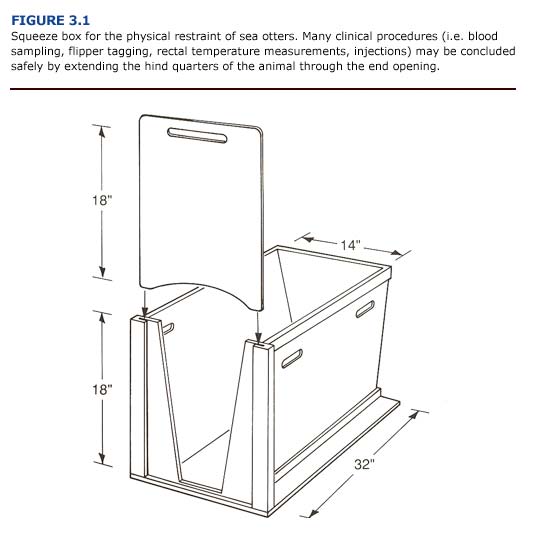
The best method to physically restrain a sea otter is to use a squeeze box (Figure 3.1) (Ames et al., 1986; Cornell, 1986; Geraci and Sweeney, 1986; Ridgway, 1972; Williams, 1986). The squeeze box is open at the top and has tapered sides so that the otter can be wedged in the bottom with a stuff bag. Stuff bags (3 feet long, 1.5 feet diameter) are made of ripstop nylon or canvas filled with large pieces of foam rubber or other soft material. A sliding door at one end of the box allows the animal’s abdomen and rear flippers to be extended for veterinary procedures. The box is made of 3/4-inch-thick polyvinylchloride (PVC), fiberglass, or marine plywood, which can be cleaned after each use. All joints are bonded with PVC adhesive or epoxy and reinforced with corner molding and stainless steel screws.

Squeeze box for the physical restrain of sea otters

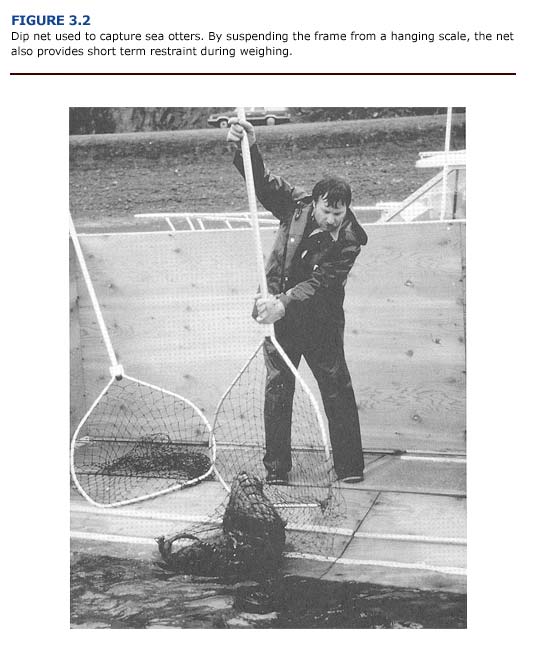
Alert and active sea otters should be handled only by experienced personnel. To use the squeeze box, the otter is removed from its pen or pool with a salmon dip net (4.5-inch stretch mesh, Figures 2.1 and 3.2). Capture personnel should wear heavy leather gloves (welder’s gloves) to protect their hands from bites and scratches. While in the net, the otter is placed on its back in the squeeze box. For more experienced animal handlers, the otter can be lifted out of the dip net by its hind flippers and placed in the squeeze box. During this procedure the otter’s face is positioned forward, away from the handler. Once the otter is in the box, a stuff bag is pressed against its chest so that the animal is firmly wedged into the box. Although the otter may bite and scratch at the stuff bag, it will be unable to injure the handler. When the otter is firmly restrained, the sliding door at the end of the squeeze box can be opened and the otter’s hind quarters extended for manipulation. When properly used, the squeeze box provides safe restraint for sea otters and protects the handlers from harm.

Long-handled salmon dip net for capturing sea otters
Dip net used to capature sea otters

ch2-chemical-restraint

Chemical Restraint

Chemical restraint is recommended for the following procedures: 1) cleaning oiled sea otters, 2) administration of solutions via stomach tube, and 3) treatments requiring 2-3 hours of immobilization.

The preferred drug combination for safe neuroleptanalgesia in adult sea otters is fentanyl (0.2 mg/kg), acepromazine (0.05 mg/kg), and diazepam (0.5 mg/kg) (Williams and Kocher, 1978; Williams et al., 1981). An intramuscular injection is given in the large muscle mass of the hind limbs while the otter is physically restrained. To reverse the anesthetic effects of fentanyl, naloxone (1 mg/kg) is administered intramuscularly. The type, dose, and time of all injections should be noted in the medical records of each otter (Appendix 2, Form G Download PDF). Suppliers of the recommended drugs are listed in Table 3.1.

Suppliers of recommended drugs for use in chemical restrain of sea otters

Dissociative anesthetics such as ketamine are not recommended because they may affect the sea otter’s normal thermoregulatory response, and several deaths have been reported (Williams and Kocher, 1978). Inhalant anesthetics such as isoflurane are not recommended for heavily oiled sea otters because they may aggravate lung damage associated with the exposure to fresh crude oil (see Chapter 1).

If a sea otter has been heavily oiled or is otherwise unhealthy, its tolerance to chemical restraint is improved by pretreating the animal with normal saline (20 ml/kg SQ or IV), enrofloxacin (2.5 mg/kg bid 1M or PO) for mature animals or amoxicillin (12 mg/kg bid 1M) for immature otters, and vitamin B-complex (0.1 ml/kg SQ). Chemical restraint is not recommended for otters that are hypothermic, severely lethargic, or unconscious.

Diazepam is not recommended in combination with fentanyl and acepromazine when release of the otter is imminent, because the animal may be too sedated and lethargic to be left unattended. Minor seizures associated with the neuroleptanalgesia produced by fentanyl and acepromazine alone are not usually life threatening. If cyanosis is observed, gentle chest compression should be initiated to stimulate breathing.

Fentanyl is an opioid drug that can cause profound sedation or unconsciousness, bradycardia, respiratory depression, and death, if accidentally sprayed into the conjunctiva of the eye or injected into a person. Consequently, only qualified staff should be allowed to administer drugs used for chemical restraint. Protective glasses should be worn when handling fentanyl; naloxone should be available to reverse the depressant effects of fentanyl. A strict drug security system must be in effect to avoid potential abuse of controlled drugs by personnel working in or around a rehabilitation center.

ch2-summary

Summary

Sea otters can be safely handled if proper physical and chemical restraint are used. The best method for physically restraining an otter is the squeeze box. The preferred method of safe chemical restraint is a combination of fentanyl, acepromazine, and diazepam. Naloxone should be used to reverse the anesthetic effect of fentanyl. These drugs are dangerous to humans and should be handled only by veterinarians and animal care specialists. To reduce physiological and behavioral stress to the otter, the period of restraint should be minimized. The type and duration of restraint will depend on the health of the otter and the purpose for handling.

ch2-lit


Literature Cited

Ames, J. A., R. A. Hardy and F. E. Wendell. 1986. A simulated translocation of sea otters, (Enhydra lutris), with a review of capture, transport and holding techniques. California Department of Fish and Game, Marine Research Technical Report No. 52.

Cornell, L. 1986. “Capture, transportation, restraint, and marking.” In Zoo and wild animal medicine, 2nd edition. M. E. Fowler, ed., 764-70. Philadelphia: W. B. Saunders Co.

Geraci, J. R., and J. Sweeney. 1986. “Clinical techniques.” In Zoo and wild animal medicine, 2nd edition. M. E. Fowler, ed., 771-77. Philadelphia: W. B. Saunders Co.

Ridgway, S. H. 1972. “Homeostasis in the aquatic environment” In Mammals of the sea: Biology and medicine. S. H. Ridgway, ed., 689-94. Springfield: C. C. Thomas Publisher.

Williams, T. D. 1986. “Mustelidae (Sea Otter).” In Zoo and wild animal medicine, 2nd edition. M. E. Fowler, ed., 820-22. Philadelphia: W. B. Saunders Co.

Williams, T. D., and F. H. Kocher. 1978. Comparison of anesthetic agents in the sea otter. Journal of the American Veterinary Medical Association 173:112730.

Williams, T. D., A L. Williams, and D. B. Siniff. 1981. Fentanyl and azaperone produced neuroleptanalgesia in the sea otter (Enhydra lutris). Journal of Wildlife Diseases 17:337-42.

ch3-intro

Chapter 3 – Introduction

Sea otters are subject to both external and internal petroleum hydrocarbon exposure during an oil spill. External oiling is the most obvious condition, and usually the first point of contamination. Internal exposure to oil can occur via several routes including dermal absorption, inhalation of hydrocarbon vapors, and ingestion by eating contaminated prey or licking oiled fur. All three routes can contribute to systemic petroleum hydrocarbon toxicity. Sea otter grooming behavior exacerbates the situation and increases the degree of oil exposure. In an effort to clean their fur, they often spread the area of contamination and may actively inhale or ingest oil (Mulcahy and Ballachey, 1993; T. M. Williams, personal observation).

This chapter focuses on the immediate actions required when oiled animals arrive at rehabilitation centers. We describe the methods for stabilizing oiled otters, determining the degree of oil contamination, conducting clinical evaluations, and initiating treatments. A method for assessing petroleum hydrocarbon toxicity using paraffinic hydrocarbon concentration in the blood is presented. We also describe the major medical problems of oiled sea otters. The incidence and initial treatment of these conditions are discussed with respect to the type and age of the spill. Subsequent treatment regimens and methods for cleaning the animals are addressed in Chapter 5 and Chapter 6, respectively.

ch3-stability

Establishing Physiological Stability in Oiled Sea Otters

The period of stabilization begins at the moment of capture and ends when the animal is ready for cleaning at the rehabilitation center. The goal of stabilization is to correct immediate life-threatening conditions (i.e. hypothermia, hyperthermia, hypoglycemia, shock, severe dehydration, sepsis) so that the otter can tolerate stresses associated with transport, handling, and cleaning. Heavily oiled sea otters should be cleaned as soon as they are clinically stable to minimize further absorption of oil. Cleaning may be postponed twenty-four hours for otters that are lightly oiled and have no serious clinical disorders. Criteria for determining the duration of a stabilization period are presented in Chapter 11.

All sea otters should receive a physical examination as soon as possible after capture. A veterinarian or animal care specialist should diagnose and treat symptoms that are immediately life-threatening. Oiled sea otters may exhibit signs of hyperthermia or hypothermia, dehydration, shock, lethargy, seizures, and depression. Respiratory and cardiovascular function should be evaluated and stabilized first, with subsequent treatments dependent on alleviating the underlying cause of the dysfunction. The normal heart rate of adult sea otters is 144-159 beats/minute, but the average heart rate can increase to 199 beats/ minute during agitated grooming (T. M. Williams, unpublished data). Respiratory rate ranges from 17-20 breaths/minute for adult sea otters (Appendix 1 Download PDF).

Initial Assessment Parameters

Along with heart rate and respiratory rate, the following parameters should be assessed immediately for otters arriving at a rehabilitation center. Most can be determined very quickly by palpation or visual observation.

(a) General Body Condition. Oiled otters may not eat in the wild, and therefore may be dehydrated and underweight. Normal body weights for adult Alaskan sea otters range from 27-48 kg for males and 16-32 kg for females. California sea otters are slightly smaller. Oiled otters often exhibit symptoms of hypoglycemia, including depression, seizures, muscular weakness, and hypothermia. A naturally high metabolic rate makes otters susceptible to hypoglycemia when deprived of food for more than several hours. To avoid or mitigate hypoglycemia and dehydration, food and ice should be offered to sea otters at least every three hours, except when they are asleep at night. Food and fluids should be withheld from otters for one hour before sedation to prevent vomiting and aspiration.

(b) Activity Level. The responsiveness of oiled sea otters can range from agitated to lethargic, and will depend on the duration and degree of exposure to oil. Early in a spill, the oil may be irritating to the skin and sensitive membranes around the eyes, nose, and flippers. In such instances, the otter may scratch its cornea and the membranes surrounding the eyes, or chew on the interdigital webbing of the hind flippers. In severe cases, cartilage on the edge of the ears or between the toes will be exposed. Excessive grooming will damage the fur by promoting hair breakage and shedding. With reduced levels of contamination, the otters will usually remain alert, groom, and accept food. Normal grooming behavior includes rubbing the ears, muzzle, and forearms, as well as licking and nuzzling the abdomen.

(c) Body Temperature. Oiled sea otters are thermally unstable and may be hypothermic or hyperthermic. If the animal is lethargic or unconscious, its core body temperature should be measured using an electronic digital thermometer with a flexible probe inserted fifteen cm into the rectum. Normal core temperature for sea otters ranges from 37-39°C (98.6-102°F). If the flexible probe cannot be easily inserted into the rectum, abnormally low or high core temperatures can be qualitatively verified by feeling the hind flippers and by observing behavioral signs. Shivering may be indicative of hypothermia, while panting and flipper expansion are commonly observed for hyperthermic otters. A hypothermic otter (core temperature less than 35°C or 95°F) will have cold hind flippers. In severe cases, the animal may be unconscious. Treatments for mild hypothermia during the stabilization period should be limited to placing the animal in a well-ventilated, warm (20°C or 68°F) area and drying the fur vigorously with towels and a pet dryer (set at room temperature). More aggressive treatments for hypothermia should be conducted under the controlled conditions of the rehabilitation center (see Chapter 5). Hyperthermic otters (core temperature greater than 40°C or 104°F) will have hot hind flippers, pant, and may exhibit agitated behavior. In severe cases, the overheated otter will be lethargic or unconscious. Chipped ice placed in the bottom of the cage will help cool hyperthermic otters awaiting cleaning.

(d) Coat Condition. Degree of oiling and water repellency should be assessed (see below and Chapter 6). Normal pelage will have a brown striated appearance. The underfur of the healthy coat remains dry even after submergence.

(e) Hydration. Exposure to crude oil is known to contribute to dehydration in marine mammals, often as a result of gastrointestinal disturbances (St. Aubin, 1990). Because 50-100% of the water intake of sea otters is derived from food (Costa, 1982), the inability to feed will lead to dehydration. Dehydration may be detected through physical examination by decreased skin elasticity, sunken globes, and dry mucous membranes. If dehydration is diagnosed or suspected, prophylactic fluid therapy is recommended. Normal saline or a 1-to-1 mixture of 5% dextrose solution and normal saline (20 ml/kg/ day SQ or IV) should be given.

(f) Signs of Pulmonary Distress (diaphragmatic breathing, hyperventilation, congestion). Following exposure to oil, the animals may show labored breathing and congestion associated with emphysema and inflamed nasal, pharyngeal, and bronchial membranes. Nasal discharges should be noted.

(g) Evidence of Shock. Signs of shock include muscle weakness, hyperventilation, cold hind flippers, pale coloration or mottling of the gums, and reduced capillary refill time following compression.

Following the general examination, blood samples from the femoral, jugular, or popliteal veins should be taken before cleaning or treatment (Figure 4.1). Blood glucose should be measured immediately using reagent strips (Chem StripsTM, BG Boehringer Mannheim, Indianapolis, Ind.), a desktop analyzer, or diagnostic units designed for at-home use by diabetics. Basic hematological and blood chemical constituents (glucose, blood urea nitrogen, hematocrit, erythrocyte sedimentation rate, white and red cell counts) are easily assessed with manual techniques utilizing desktop blood analyzers (Eastman Kodak, Inc.; Abbot Laboratories). These parameters provide rapid biochemical profiles which should be determined at the rehabilitation center to provide immediate diagnostic information for the veterinary staff. Comprehensive blood panels may be obtained later by sending the remainder of the blood sample to a veterinary diagnostic laboratory or appropriate facility with automated diagnostic equipment.
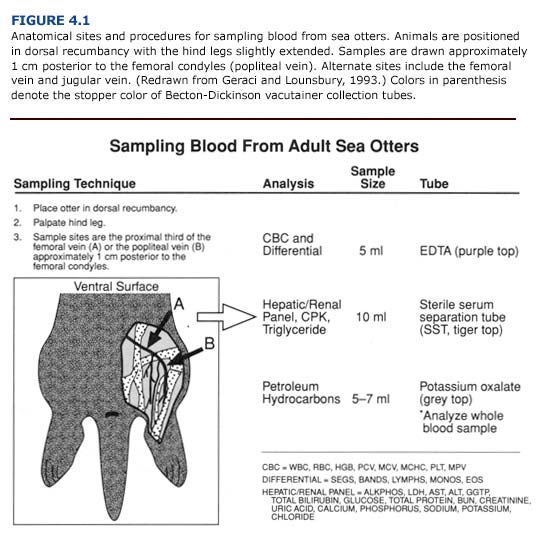
Sampling blood from adult sea otters

Results from the initial clinical evaluation should be entered on admissions forms (Appendix 2, Forms F and H) which will remain with the animal throughout the rehabilitation process. Data recorded on the forms will be used in rating each animal during triage and will provide the basis for subsequent treatments.

Treatments during stabilization should include the prophylacti administration of:
1) enrofloxacin (2.5 mg/kg bid IM or PO) for mature animals and amoxicillin (12 mg/kg bid 1M) for immature otters to prevent or treat infections,
2) dexamethasone (1-2 mg/kg/day IM or IV) to prevent or treat shock,
3) vitamin and mineral supplements including vitamin E (400 IU/day), vitamin B-complex, and selenium (SeletocTM, 0.1 ml/kg single dose IM or SQ in two sites). These supplements can be given as a multivitamin tablet (SeaTabsTM),
4) cimetidine (5-10 mg/kg tid PO or 10 mg/kg qid IV or IM) or ranitidine (1-4 mg/kg tid PO) for gastric ulcers, and
5) diazepam (0.2 mg/kg PO or 0.1 mg/kg IM) to reduce stress and stimulate appetite. This treatment is optional.

ch3-assessing

Assessing the Degree of Oil Contamination

The composition and toxicity of crude oil changes as it degrades following a spill. The rate of degradation depends on ambient temperature and ocean conditions, with fresh crude oil often remaining toxic for approximately three to seven days (Neff, 1990). 1990). In sea otters, the internal and external consequences of contamination are different for fresh and weathered oil (Williams, et al.,1988; Williams and Davis, 19990). Consequently, the condition of oiled otters may vary over the course of an oil spill. From the perspective of wildlife, it is helpful to subdivide catastrophic oil spills into two phases; an Early Phase comprising the first two to three weeks of most spills, and a Late Phase consisting of the remainder of the clean up effort or rehabilitation program. During the Early Phase, the oil contains the greatest concentration of aromatic petroleum compounds (volatiles) and is considered the most toxic. Animals which arrive at a rehabilitation center during this period will show the highest incidence and severity of medical problems (Williams, 1990). During the Late Phase, the number of animals requiring rehabilitation will diminish. These animals also show jess external oiling and fewer medical conditions.

The division between Early and Late Phases of an oil spill is less distinct for chronic events involving long term oil release such as an oil platform blowout or leaking transport vessel. During these events, wildlife responses to contamination will depend on the composition of the oil encountered, degree of weathering, and the duration of exposure.

The initial assessment of oil contamination in sea otters is made by visual examination of the pelage. Four classifications are suggested:
1) heavily oiled (>60% body coverage with saturation to the skin),
2) moderately oiled (30-60% body coverage that includes areas of saturation),
3) lightly oiled <30% body coverage or light sheen on fur), or 4) unoiled (no visual or olfactory evidence of oiling). The contamination level in sea otters will change as the oil composition changes. For example, Figure 4.2 shows external contamination that occurred in sea otters during the Exxon Valdez oil spill (EVOS) (Williams et al., 1990). Almost 60% of the otters arriving at rehabilitation centers during the first two weeks of the spill were heavily oiled. By the fourth week, the majority of otters were lightly oiled. As the rehabilitation program continued, the number of otters arriving at rehabilitation centers and the degree of oiling decreased rapidly with time. While ninety-four otters were retrieved in the first two weeks, only forty-seven animals arrived during weeks three and four. Two months after the spill, less than one otter arrived per day at rehabilitation centers. Degree of external oiling for sea otters on admission to rehabilitation centers during the EVOS

As the oil becomes more diffuse, detection on the fur becomes increasingly difficult. Sheen oil, in particular, is difficult to detect on sea otter fur. A noticeable petroleum odor or stickiness of the fur indicates contact with oil.

Internal exposure to petroleum hydrocarbons is comparatively more difficult to verify. Furthermore, the toxicity of ingested oil is not fully known. A quick, relative measure of systemic exposure for large numbers of animals may be obtained by measuring petroleum hydrocarbon levels in blood samples. The concentration of petroleum hydrocarbons provides important diagnostic information, if the sample is obtained within forty-eight hours of exposure to oil. Because some petroleum compounds may be cleared quickly from the blood, longer delays between exposure and blood sampling may lead to false negative results. To avoid lengthy, difficult, and expensive analyses, we suggest measuring total paraffinic hydrocarbons, rather than the more toxic polycyclic aromatic hydrocarbon (PAH) compounds (Neff, 1990). If a blood sample is taken soon after exposure to oil, paraffinic hydrocarbon levels for individual samples are proportional to PAH concentrations. This test was used during the EVOS and is recommended for assessing petroleum hydrocarbon exposure in oiled otters.

Five ml blood samples are drawn from the femoral, jugular, or popliteal veins (Figure 4.1) and placed in potassium oxalate vacutainers (Becton-Dickinson). Whole blood samples should be immediately transferred to acid washed vials, frozen, and stored at -10°C until analysis. National Medical Services, Inc. (Willow Grove, PA) and the Geochemical and Environmental Research Group of Texas A&M University (College Station, TX) conduct tests for petroleum hydrocarbons in blood samples (see Chapter I, Table 1.2). Local hospitals may suggest additional analytical facilities near the site of the rehabilitation center. The choice will depend on cost, shipping time, and the laboratory analysis time. To provide the most benefit to the otters and attending veterinarians, test results should be available within two to three days of blood sampling.

Sampling blood from adult sea otters
Clinical laboratories for the analysis of petroleum hydrocarbons in biological tissue

The recommended analysis provides the veterinarian with a value for the total concentration of paraffinic hydrocarbons (C3 -36) in each blood sample. Baseline levels of these paraffins, determined from unoiled adult Alaskan sea otters held in seaquariums, are, less than one ppm. Higher levels indicate acute exposure to petroleum hydrocarbons. The presence of paraffinic hydrocarbons in the blood is a signal for veterinarians to initiate more aggressive treatments for mitigating oil toxicosis. (See Chapter 5.)

Several trends were apparent following the analysis of paraffinic hydrocarbons in sea otters contaminated during the EVOS (Williams and Davis, 1990). First, total paraffinic hydrocarbon (TPH) concentrations in the blood were variable for oiled sea otters. TPH ranged from 19 ppm to 800 ppm in adult sea otters on admission to rehabilitation centers (Figure 4.3). Second, internal exposure based on TPH levels did not consistently correlate with the degree of external oiling. Rather, the primary correlation appeared to be between TPH concentration and when the animal was exposed to the oil (ie. during the Early or Late Phases of the spill).

Total paraffinic hydrocarbon concentration in whole blood in relation to degree of external oiling for adult sea otters during the EVOS

In view of this, the highest paraffinic hydrocarbon levels should be expected for heavily oiled animals captured during the first two weeks of a spill. The mean TPH concentrations for lightly and moderately oiled otters will probably be indistinguishable from one another. Low TPH levels can occur in animals from all four categories of oiling. In general, external contamination will be a poor indicator of internal contamination and should not be used as an index of systemic exposure.

The likelihood that a contaminated animal will survive can be assessed from the threshold dose (TD) of the contaminant (Klaassen and Eaton, 1991). The TD for North Slope crude oil during the EVOS was calculated from the relationship between the survivorship of oiled otters and the concentration of paraffinic petroleum hydrocarbons in
the blood. In oiled sea otters, survivorship increased as TPH concentration decreased (Figure 4.4). Based on this curve and individual variation in TPH concentration for otters surviving at least twenty days after contamination, the mean TD for crude oil during the EVOS was 112±92 SD ppm. Animals showing blood TPH levels below this value are more likely to survive than those with higher values. Note that the highest level of TPH measured for an oiled sea otter that survived to release was 171 ppm.

Total paraffinic hydrocarbon concentration in whole blood versus survivorship for adult sea otters contaminated during the EVOS

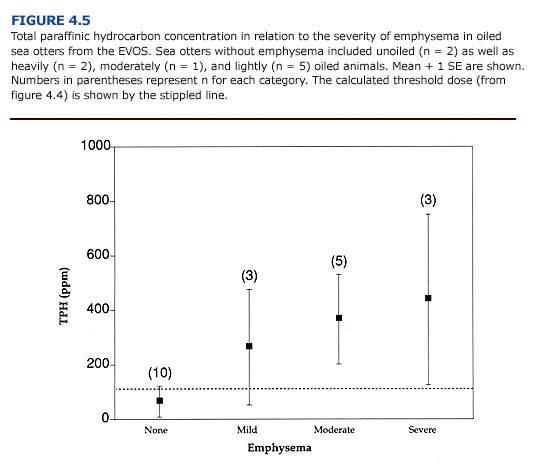
The threshold dose also provides a useful index of systemic damage in acutely oiled sea otters. This is demonstrated by examining the relationship between TPH concentration and the incidence of emphysema for otters contaminated during the EVOS (Figure 4.5). Blood TPH levels of otters displaying emphysema were significantly higher (at p<0.00l) than those for healthy otters. TPH levels also correlated well with the severity of emphysema. Sea otters without emphysema had a mean TPH level of 65±SE ppm (n = 10), well below the calculated threshold dose. All animals diagnosed with subcutaneous emphysema had TPH levels greater than 224 ppm, more than two times the mean threshold value of 112 ppm. Total paraffinic hydrocarbon concentration in in relation to the severity of emphysema in oiled sea otters from the EVOS

Although the TPH concentration provides little information about exposure to specific petroleum hydrocarbons, it provides a relative index of toxicosis. Lethal thresholds based on TPH concentration will depend on the type of oil encountered, duration of contact, and the species affected. Factors such as the origin and type of petroleum product and the state of weathering influence the petroleum hydrocarbon composition, and thus, toxicity of the oil. Acute exposure will yield different responses than chronic exposure. Furthermore, individual species may respond differently to oil contamination (see Chapter 15).

ch3-treating

Treating the Medical Disorders of Oiled Sea Otters

Oiled otters brought to rehabilitation centers present a wide range of medical conditions varying in severity (Williams and Davis, 1990). During the first weeks following the EVOS, more than 36% of the captured sea otters were hypothermic, 27% were hyperthermic after transport, and more than 45% of the animals showed blood glucose concentrations below the minimum normal value (88 mg/ dl; Appendix 3 Download PDF). Also, nearly 70% of the otters that died during this period exhibited some form of emphysema.

Otters oiled during the first three weeks of a catastrophic spill show the severest medical problems, and consequently the highest mortality. As the oil dissipates and weathers, the incidence and severity many medical disorders will decline. Therefore, treatment regimes differ for otters contaminated during the Early and Late Phases of a spill.

Treatments for Early Phase Sea Otters

Otters arriving at the rehabilitation center during the Early Phase of an oil spill will require treatment for external and internal exposure to oil. Medical problems caused by exposure to oil will be exacerbated by the stress of capture, handling, and rehabilitation. However, it will be difficult to differentiate between the detrimental effects of oiling and the stress of captivity when treating oiled otters.

Treatment of Early Phase otters should begin during the cleaning process. The animals should be weighed and then sedated as required for handling. An ophthalmic ointment (Bacitracin) should be applied to the eyes to protect them from detergent and oily water. The flexible probe of an electronic digital thermometer should be inserted fifteen cm into the rectum to monitor core temperature.

Animals with core temperatures below 35°C (95°F) should 1 treated for severe hypothermia (see Chapter 5 for details). This procedure includes the intravenous infusion of warm (37-39°C or 98.6-102°F) fluids and warm water (37°C or 98.6°F) immersion. The animal’s vital signs (respiratory rate, heart rate, blood oxygen saturation) should be monitored during rewarming. A portable electrocardiograph (EKG) and pulse oximeter with a flexible probe that can be attached to the animal’s tongue are essential for monitoring heart rate and blood oxygen saturation, respectively. Ventricular arrhythmias and tachycardia may be treated with lidocaine hydrochloride (1-2 mg/kg IV bolus); atrial arrhythmias are controlled with propranolol (0.02-0.06 mg/kg slow IV infusion). Caution should be used when administering these drugs to hypothermic anima because over-medication can occur when the animal rewarms Hyperthermic otters (core temperature greater than 40°C or 104°F) should be cooled by placing ice packs on the hind flippers and by reducing the rinse water temperature to 10°C (50°F) during washing.

Hypoglycemia (plasma glucose less than 60 mg/ dl) should be treated with 5% dextrose (20 ml/kg SQ) or 10-20% dextrose (10-20 ml/kg IV to effect). For a more sustained effect, a 50% dextrose solution (1 ml/kg) should be given by stomach tube; this is followed by the subcutaneous infusion of 5% dextrose to maintain the blood glucose concentration at normal levels.

Oiled sea otters may be washed while their core temperature and blood glucose are being stabilized. Rinse water temperature should be adjusted to help maintain the otter’s core temperature at 37-39°C (98.6-102°F). During rinsing, prophylactic fluid therapy for dehydration (normal saline or a 1-to-1 mixture of 5% dextrose solution and normal saline; 20 ml/kg/ day) should be initiated with a subcutaneous line inserted between the shoulders or the loose skin behind the neck. Antibiotics, dexamethasone, and vitamin/ mineral supplements should be administered as described under the previous section on stabilization.

Fecal samples are easily collected while the otters are being washed and may be used to assess the ingestion of crude oil by suspending the sample in water. To mitigate the effects of ingested oil, all animals from the Early Phase of a spill may be treated with a petroleum hydrocarbon adsorbent. A slurry of activated charcoal (Toxiban TM, 6 ml/ kg) can be administered via stomach tube just prior to anesthetic reversal after cleaning. Care must be taken to prevent aspiration and gastric reflux during intubation. (See Petroleum Hydrocarbon Ingestion and Exposure in Chapter 5 for more details.)

Sea otters that are exposed to oil during the Early Phase of a spill may exhibit signs of respiratory distress associated with interstitial or subcutaneous emphysema. This condition may be diagnosed during physical examinations. The axillary area and neck of the otters should be palpated and the presence and location of subcutaneous air recorded on the animal’s medical chart. Crepitation in the axillary areas is an indicator of serious pulmonary damage (see Injuries to the Respiratory Tract in Chapter 5). Pulmonary distress, including hyperventilation, congested nasal passages, and diaphragmatic breathing, should also be noted. The interstitial form of emphysema can be confirmed only by radiography or during necropsy. Treatment of this condition is limited to supportive care. Diazepam (0.2 mg/kg PO or 0.1 mg/kg IM) may be administered to calm excited or agitated otters that exhibit labored breathing or hyperventilation. Diazepam should never be given to otters that show symptoms of shock. Positive pressure inhalation anesthetics or gases are contraindicated for otters with pulmonary disorders.

Treatments for Late Phase Sea Otters Sea otters contaminated during the Late Phase of a spill usually benefit from a twenty-four to thirty-six hour rest period before cleaning and treatment (see Chapter 11). Late Phase otters that have encountered light sheen oil that does not penetrate the underfur or disrupt the insulating air layer do not require cleaning. These otters should be placed in a holding pool for observation. If the otter’s fur appears normal and maintains its insulating properties, then the animal should be moved to a prerelease facility as soon as possible after physical examination and blood sampling (see Chapter 12). Sea otters are able to remove small amounts of crude oil from the surface of their fur during normal grooming. However, it will be necessary to clean small patches of oil if it has penetrated the underfur.

It is unlikely that Late Phase otters have ingested oil in sufficient amounts to cause a toxic effect. Unless fecal and blood tests indicate otherwise, activated charcoal adsorbents should not be administered. Likewise, interstitial and subcutaneous emphysema are rarely ob- served in otters during the Late Phase of a spill. Because this group of animals is less prone to shock and hypothermia, organ congestion and tissue damage associated with circulatory collapse are rare. Treatment protocols should be conservative and based on the results of a physical examination, blood analysis, and behavior.