capture-natural-history-distribution
Distribution


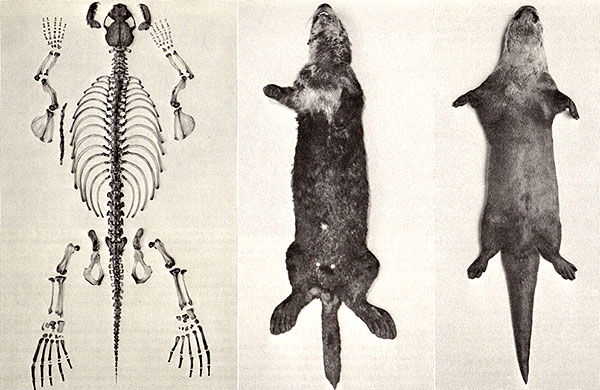
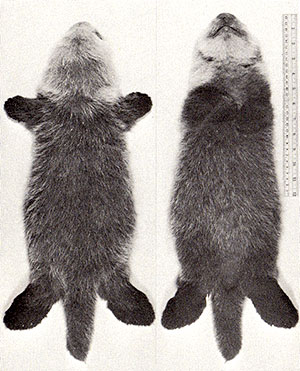
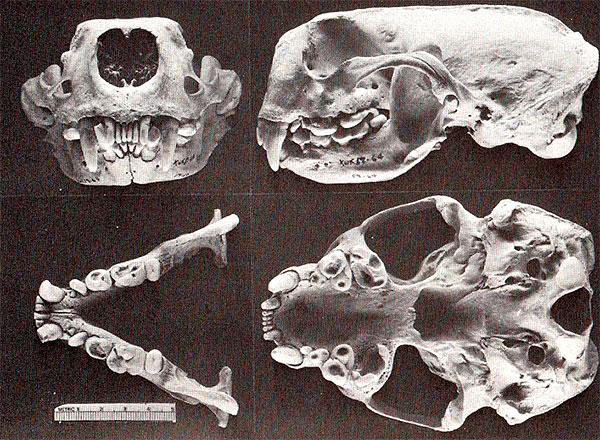
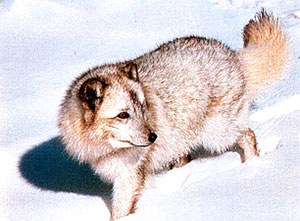
Fur is a major barrier to heat flow because it traps still air next to the skin. Because of the low specific heat capacity of air (0.24 cal/g/°C), it acts as a barrier to convective heat flow. As one might expect, the insulation value of fur increases with the thickness of the fur (and the air layer) and reaches the maximum for some of the larger terrestrial mammals such as the arctic fox.
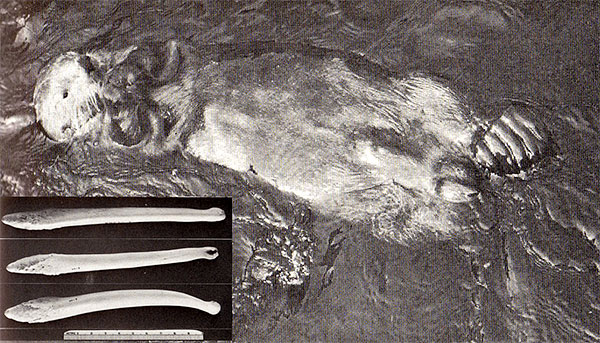
However, among marine mammals, long fur does not occur, probably because of the increased hydrodynamic drag that it creates. As a result, marine mammals that rely on fur such as sea otters have a very dense, but short fur.
Although the average fur insulation of sea otters in water is good (ca. 0.3 m2 °C/W), it is not as good as that of the arctic fox in air (1.2 m2 °C/W). However, if an arctic fox were immersed in water, the insulation of its fur would not be as good as that of a sea otter. Hence the fur of sea otters is a compromise between good insulation and hydrodynamic properties.
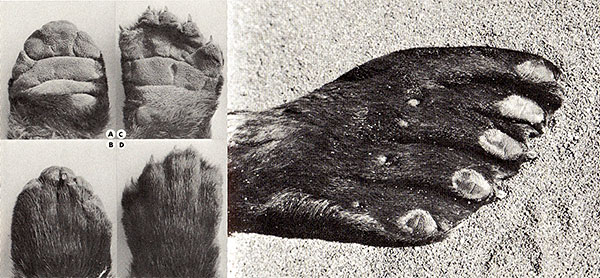
Sea otter fur is the densest of any mammal and is composed of stout overhairs (guard hairs) and shorter, finer underhairs. Hair density ranges from 26,413 to 164,662 per cm2, with highest densities on the forearms (164,662), sides (157,264), rump (118,691), stomach (82,251), and back (77,526). The lowest densities are found on the chest (34,639), legs (30,761), and feet (26,413). Each hair bundle contains one guard hair and a variable number of underhairs (range = 12 underhairs per bundle on the legs to 108 underhairs per bundle in the mid-lateral areas).
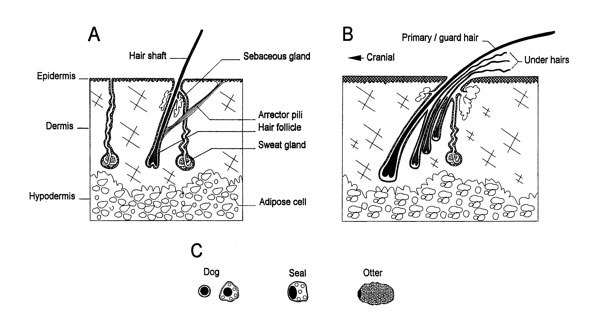
Hair follicle morphology of (A) a terrestrial mammal and (B) a sea otter. (C) Cross-sectional views of the arrangement of hairs in follicles for a dog, seal and sea otter.
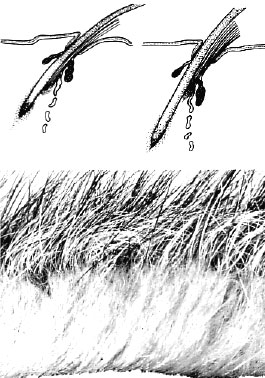
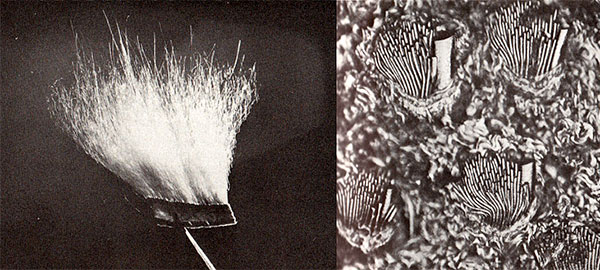
The length of the guard hairs (2.6-31.5 mm) and underhairs (1.5-26.3 mm) also varies with location on the body, with the shortest hairs on the legs and feet. The guard hairs are oval to round in cross section and have a diameter that ranges from 44-106 microns (mean diameter = 70 microns). Underhairs, which are irregularly shaped due to cuticular scales, are wavy and have a mean diameter of 10.3 microns. Sea otters appear to replace their hair throughout the year and do not have a seasonal molt.
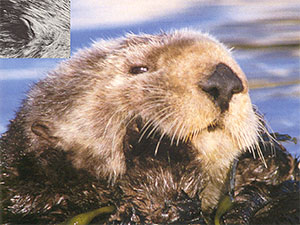
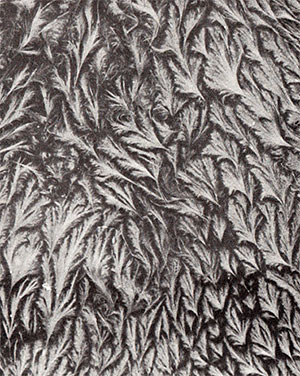
Cross sectional view of sea otter fur and microscopic view of shaved hair follicles
In the cold marine environment, the fur of sea otters is not sufficient to maintain a core body temperature Therefore, sea otters must augment heat production Their resting metabolic rate tends to be 2-3 times higher than that for a terrestrial mammal of equivalent size. The skin of the seal has relatively thin fur and a heavy layer of blubber, which provides most the insulation.
Sea otters may eat 25% of their body mass in food each day to support the high metabolic rate.
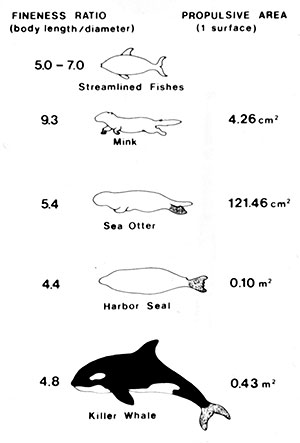
The hydrodynamic drag experienced by marine mammals is reduced by a streamlined body shape and internalized limbs. The better the streamlining, the lower the drag force.
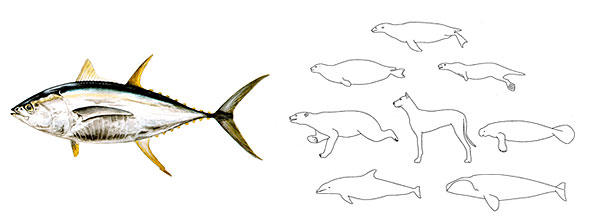
Optimum streamlined shapes with minimum drag have a fineness ratio equal to 4.5. Streamlined fish usually have a fineness ratio from 5 to 7. Semi-aquatic mammals, such as the mink have a fineness ratio of 9.3: sea otters 5.4. More aquatic pinnipeds and cetaceans have fineness ratios of between 4.4 and 4.8, which approximate the ideal shape to minimize drag.
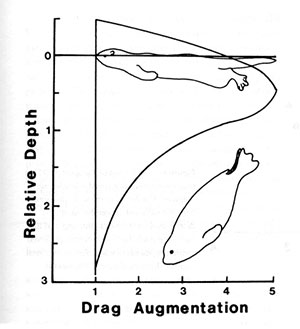
The increased drag experienced by an animal swimming at the surface, results from the additional force generated by the surface wave or wake. Drag force approaches a maximum at the surface and decreases to a minimum at ca. three body diameters below the surface. Consequently, it is easier for an animal to swim below the surface than at the surface.
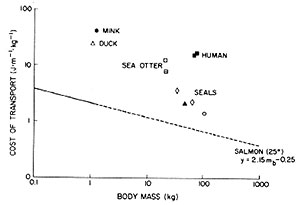
Hydrodynamic shape, efficient propulsion and subsurface swimming allow marine mammals to swim at very low energetic cost and achieve high speeds.
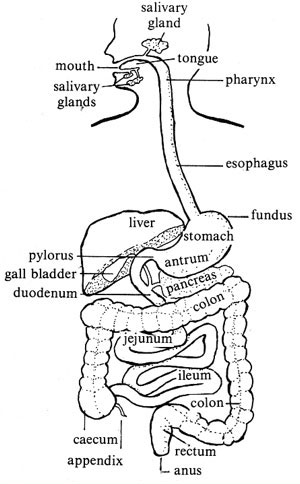
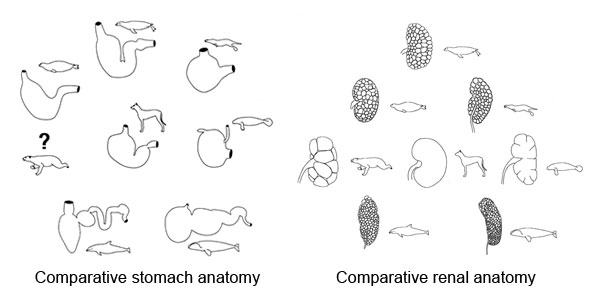
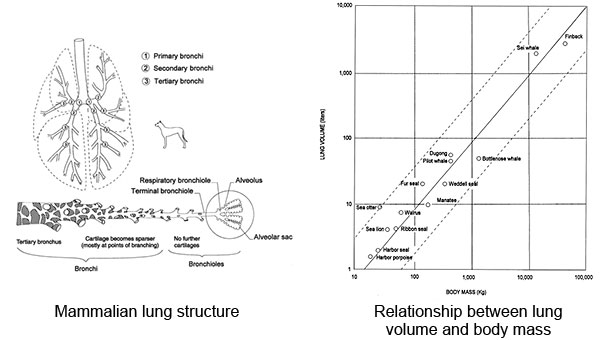
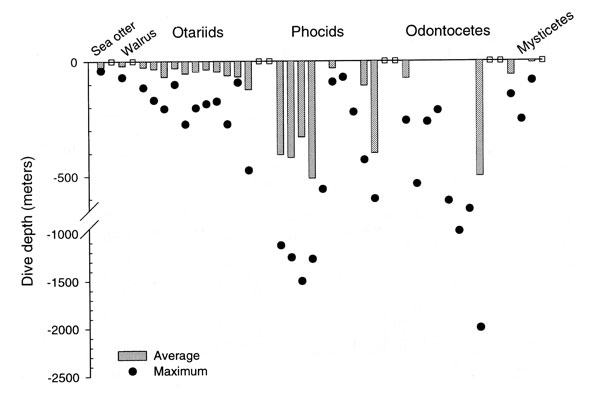
ABDOMINAL TYMPANY. Bloating or gas in the abdomen.
ACANTHOCEPHALIDS. Thorny-headed or spiny-headed parasitic worms of animals from the phylum Acanthocephalia.
ACIDOSIS. A pathologic condition resulting from accumulation of acid in, or loss of base, from the body.
ACIDOTIC. Pertaining to or characterized by acidosis.
ALVEOLAR. Pertaining to an alveolus (a small saclike dilation) in the mammalian lung. The alveolus is the primary gas exchange structure of the lung.
ANOREXIA. Lack or loss of the appetite for food.
ANAPHYLAXLS. An unusual or exaggerated allergic reaction of an organism to foreign protein or other substances which may produce shock.
APLASIA. Lack of development of an organ or tissue, or of the cellular products from an organ or tissue.
ARRHYTHMIA. Any variation from the normal rhythm of the heart beat.
ARTERIAL FIBRILLANON. Arterial arrhythmia characterized by rapid randomized contractions of the arterial myocardium, causing a totally irregular, often rapid ventricular rate.
ASCITES. Effusion and accumulation of serous fluid in the abdominal cavity.
ASPIRATION. The act of inhaling. The removal of fluids or gases from a cavity by the application of suction.
ATAXIA. Failure of muscle coordination; irregularity of muscle action.
ATELECTASIS. Collapse of the adult lung.
ATRIAL. A chamber affording entrance to another structure or organ, usually the heart.
ATROPINE. An alkaloid in the form of white crystals soluble in alcohol and glycerine; used as an anticholinergic for relaxation of smooth muscles in various organs, to increase heart rate by blocking the vagus nerve, and as a local application to the eye to dilate the pupil and to paralyze ciliary muscle for accommodation.
AUSCULTATION. The act of listening for sounds within the body, chiefly for ascertaining the condition of the lungs, heart, pleura, abdomen and other organs, and for the detection of pregnancy.
AUTOLYSIS. The spontaneous disintegration of tissues or of cells by the action of their own autogenous enzymes, such as occurs after death and in some pathological conditions; the destruction of cells of the body by its own serum.
AUTONOMIC NERVOUS SYSTEM. The portion of the nervous system concerned with regulation of the activity of cardiac muscle, smooth muscle and glands.
AXILLARY. Pertaining to a small pyramidal space between the upper lateral part of the chest and the medial side of the arm, and including, in addition to the armpit, axillary vessels, the bronchial plexus of nerves, a large number of lymph nodes, and fat and loose alveolar tissue. The term often refers to the transverse plan through the chest at the level of the armpits.
BILIRUBINURIA. Presence of a bile pigment in the urine.
BRADYCARDIA. Slowness of the heart beat, as evidenced by slowing of the pulse rate to less than 60 beats per minute.
BRONCHOSPASM. Spasmodic contraction of bronchial muscle in the lungs.
BULLAE. Plural for bulla, a sac.
BULLOUS. Pertaining to or characterized by bullae.
CAPTURE MYOPATHY SYNDROME. Muscle damage caused, in part, by lactic acidosis resulting from extreme exercise or exertion such as occurs when animals are chased or physically restrained during capture.
CARDIAC ARRHYTHMIAS. Any variation from the normal rhythm of the heart beat, including sinus arrhythmia, premature beat, heart block arterial fibrillation, arterial flutter, pulsus alterans, and paroxysmal tachycardia.
CARDIOMEGALY. Cardiac hypertrophy; enlargement of the cardiac muscle.
CATECHOLAMINE. Any of a group of amines that act upon nerve cells as neurotransrnitters or hormones. Adrenaline, norepinephrine, and doparnine are catecholamines.
CATHARTIC. An agent that causes evacuation of the bowels by increasing bulk and stimulating peristaltic action.
CEPHALIC. Pertaining to the head or the head end of the body.
CEPHALEXIN. An oral cephalosporin used in the treatment of pneumococcal and Group-A streptococcal respiratory infections and infections of the urinary tract, skin, and soft tissue.
CESTODES. Any parasitic tapeworm or platyhelminth of the class Cestoidea, especially those of the subclass Cestoda.
CETACEANS. Any of an order (Cetacea) of marine mammals including whales, dolphins, and porpoises.
CHLORAMPHENICOL. An antibiotic substance originally derived from cultures of Streptomyces venezuelae, and later produced synthetically. It occurs as fine, white to grayish or yellowish white, needlelike crystals or elongated plaques, and is used as an antibacterial and antirickettsial.
CLONUS. Alternate muscular contraction and relaxation in rapid succession.
COLONIC IRRIGATION. Flushing of the colon with warm water or fluid to raise body temperature.
CORTICOSTEROIDS. Any of the steroids produced by the adrenal cortex, including cortisol, corticosterone, aldosterone, etc.
CREPITATION. A sound like that made by rubbing the hair between the fingers, or popping.
CYANOSIS. A bluish discoloration, applied especially to such discoloration of skin and mucous membranes due to excessive concentration of reduced hemoglobin in the blood.
DECUBITAL ULCERS. An ulceration caused by prolonged pressure in an animal allowed to lie still on a flat surface for a long period of time.
DEHYDRATION. The removal of water from a substance. The condition that results from excessive loss of body water.
DEXAMETHASONE. A white, odorless crystalline powder used as anti-inflammatory adrenocortical steroid of the glucogenic type.
DIARRHEA. Abnormal frequency and liquidity of fecal discharges.
DIAZEPAM. An off-white to yellow crystalline powder used as a minor tranquilizer, and also as a skeletal muscle relaxant. This drug is commonly referred to as valium.
DIURESIS. Increased secretion of urine.
DIURETIC. Increasing the secretion of urine, or an agent that promotes urine secretion.
DYSFUNCTION. Disturbance, impairment, or abnormality of an organ’s function.
DYSPNEA. Difficult or labored breathing.
EDEMA. The presence of abnormally large amounts of fluid in the body’s intercellular tissue spaces; usually applied to demonstrable accumulation of excessive fluid in subcutaneous tissues.
EMACIATION. Excessive leanness; a wasted condition of the body.
EMESIS. The act of vomiting.
EMPHYSEMA. A pathological accumulation of air in tissues or organs; applied especially to such a condition of the lungs.
EPIDERMIS. The protective outer skin layer of vertebrate animals covering the sensitive dermis.
EPISTAXIX. Nosebleed; hemorrhage from the nose.
ERYTHROCYTE. Red blood cell.
ENTERAL. Within, by way of, or pertaining to the small intestine.
EVOS. Abbreviation for the 1989 Exxon Valdez oil spill in Prince William Sound, Alaska.
FATIGUE. A state of increased discomfort and decreased efficiency resulting from prolonged or excessive exertion; loss of power or capacity to respond to stimulation.
FECES. The excrement discharged from the intestines, consisting of bacteria, cells exfoliated from the intestines, secretions (chiefly of the liver), and a small amount of food residue.
FELINE PANLEUKOPENIA. A viral disease of cats, characterized by leucopenia and marked by inactivity, refusal of food, diarrhea, and vomiting.
GLUCOCORTICOIDS. Any corticoid substance which increases gluconeogenesis, raising the concentration of liver glycogen and blood sugar.
GLYCOGEN. A polysaccharide, the chief carbohydrate storage material in animals. It is formed by and stored in the liver and to a lesser extent in muscles, being depolymerized to glucose and liberated as needed.
HAIR FOLLICLES. A cavity or sac in the body in which hair is produced.
HEMATOPOIETIC. Pertaining to or affecting the formation of blood cells.
HEMOCULT TEST. Bacteriological culture of the blood.
HEMODIALYSIS. The removal of certain elements from the blood by virtue of the different diffusion rates through a semipermeable membrane.
HEMORRHAGIC GASTROENTERITIS. Bleeding and inflammation of the stomach and intestines.
HEPATOENCEPHALOPATHY. A degenerative disease of the brain, usually occurring secondarily to advanced liver disease but also seen in the course of any severe disease.
HISTIOCYTOSIS. A condition marked by the abnormal appearance of histiocytes in the blood.
HYPERCAPNIA. Excess of carbon dioxide in the blood.
HYPERKALEMIA. Abnormally high potassium concentration in the blood, most often due to defective renal excretion.
HYPERPHOSPHATEMIA. An excessive amount of phosphates in the blood.
HYPERPLASIA. The abnormal multiplication or increase in the number of normal cells in normal arrangement in a tissue.
HYPERTHERMIA. Abnormally high body temperature.
HYPERTRIGLYCERIDEMIA. An excess of triglycerides in the blood.
HYPERVENTILATION. A state in which an increased amount of air entering the pulmonary alveoli (increased alveolar ventilation), results in reduction of carbon dioxide tension and eventually leads to alkalosis; deep and rapid breathing.
HYPOALBUMINEMIA. An abnormally low albumin (a type of plasma protein) content of the blood.
HYPOGLYCEMIA. An abnormally diminished glucose content of the blood, which may lead to tremulousness, cold sweat, piloerection, hypothermia, and headache accompanied by confusion, hallucinations, bizarre behavior, and ultimately, convulsions and coma.
HYPOREFLEXIA. Weakening of the reflexes.
HYPOTHERMIA. An abnormally low core body temperature.
HYPOXIC TISSUES. Low oxygen content or tension; deficiency of oxygen in tissues.
IMMUNOSUPPRESSED. Artificial prevention or diminution of the immune response.
INTERSTITIAL. Occupying the small, narrow spaces or interstices of tissue.
INTRAGASTRIC LAVAGE. The irrigation or washing out of the stomach.
ISCHEMIA. Deficiency of blood supply due to functional constriction or actual obstruction of a blood vessel.
ISOTONIC. Having the same osmotic pressure.
JUGULAR. Pertaining to the neck; a jugular vein.
LARYNGEAL. Pertaining to the larynx.
LAVAGE. The irrigation or washing out of an organ, such as the stomach or bowel.
LEPTOSPIROSIS. Infection by Leptospira. The infections are transmitted to man from dogs, swine, and rodents or by contact with contaminated water, as in swamps, canals, or ponds.
LEUKOCYTE. White blood cell.
MEDIASTINUM. The mass of tissues and organs separating the two lungs, between the sternum in front and the vertebral column behind, and from the thoracic inlet above to the diaphragm below.
MELENA. Dark, tarry stools.
METABOLIC ACIDOSIS. A disturbance in which the acid-base status of the body shifts toward the acid side because of loss of base or the retention of noncarbonic, or fixed acids.
MYOCLONUS. Shock-like contraction of a portion of a muscle, an entire muscle, or a group of muscles; restricted to one area of the body or appearing synchronously or asynchronously in several areas.
MYOCARDIUM. The middle and thickest layer of the heart wall composed of cardiac muscle.
MUSTELIDS. Members of the family Mustelidae: weasels, stoats, badgers, otters, polecats, martens.