ch14-weather

Weather

When it comes to the weather, expect the unexpected. Difficult weather conditions include extreme cold and hot temperatures, as well as severe sea and wind conditions.

Cold Temperatures

Cold temperatures can cause injury in the form of chilblains, frostbite and hypothermia. It is therefore important to dress appropriately in cold temperatures and watch for early signs of cold injury in yourself and your co-workers. Warm clothing should be worn in foul weather conditions. A change of clothing is also recommended.

Chilblains

Chilblains is the least serious cold injury and is characterized by localized swelling, itching and painful redness of the exposed skin. The affected area should heal on its own when rewarmed.

Frostbite

Frostbite is caused by cold temperatures and results in injury to exposed skin or tissue. Areas affected by frostbite become white, gray or mottled white in the early stages. In later stages of frostbite the affected area looks white and waxy. If you notice anyone with signs of frostbite tell your supervisor or get medical attention immediately.

Hypothermia

Hypothermia is lowering of the body’s core temperature which can cause injury and death. Onset is very rapid (approx. 20 minutes) if one falls into cold coastal water, but temperatures of 10°C (50°F) or lower can bring it on unless proper safeguards are taken, particularly in wet, windy conditions.

Wind Chill Factors

Wind chill factors can become extremely critical in the wet environment response personnel sometimes must work in. Warm protective clothing can become wet, rendering it ineffective. Adequate personal protective equipment is essential for reducing injury and increasing your chance of survival. Your supervisor will inform you of the appropriate protective clothing and equipment adequate for the risk of cold exposure.

Typical signs of cold exposure are:

  • Loss of concentration and confusion
  • Shivering
  • Complaints of feeling cold

High Temperatures

High temperatures can cause heat exhaustion and heat stroke. Differentiation between the two is usually easy, however, more than one condition may be present. Of the two, heat stroke is very serious and medical attention is required immediately at the onset of symptoms. If you notice any signs of heat exhaustion or heat stroke in yourself or co-workers, report immediately to your supervisor and get medical assistance.

Heat exhaustion is caused by water depletion or salt depletion. In either type of heat exhaustion, the bodies ability to sweat is maintained.

Some typical signs of heat exhaustion:

  • Nausea
  • Dizziness
  • Sweating, pale skin

Heat stroke or sunstroke is a life threatening medical emergency. It is caused by the body losing its ability to sweat.

Some typical signs of heat stroke (sunstroke):

  • Dry, hot flushed skin
  • Rapid pulse
  • High temperature
  • Muscular twitching

Sea and Wind Conditions

Sea and wind conditions are not uniform throughout coastal areas because of mountains, channels and other factors. Workers must be prepared for the forecast, and unexpected sea and wind conditions.

Buddy System

Keep an eye on yourself and your buddy. When necessary, stop work and take time to recover. Report all cold or heat exposure symptoms to your supervisor; others may be suffering the same problem.

ch15-intro

Chapter 15 – Introduction

The amphibious life history of pinnipeds and polar bears exposes them to spilled oil under circumstances not faced by sea otters. Their utilization of coastal and pack ice zones (which in many cases coincide with areas of hydrocarbon exploration, handling and transport) and the gregariousness of some pinnipeds, increase the potential for large scale impact. Furthermore, pinnipeds are a highly diverse group of mammals in terms of their global distribution, size, behavior, difficulty and risk of handling, and susceptibility to oil contamination. Any prediction of the impact on this group of animals must consider such variables as the type of oil involved, how much it has weathered, and the environmental conditions at the time. Light oil freshly spilled on a warm day is a threat to those breathing the vapors; heavy, weathered or residual oil in cold water is tenacious enough to restrict physical movement. In view of this, we caution against generalizing the findings of previous investigations. Rather, we encourage a thorough investigative approach to each new case to advance our ability to cope with inevitable future events.

The goal of this chapter is to provide workers with a practical framework for dealing with an oiled pinniped or polar bear. Oearly, the scope of potential scenarios of oil impact among these species is enormous. Our approach is to present a guide that must necessarily be tailored to meet local needs and animals. We assume that workers undertaking any such action will have a thorough knowledge of the life history and ecology of the species involved and the environmental and logistic conditions of the site. For a more detailed treatment of this subject, we refer readers to McLaren (1990) and St. Aubin (1990a) for pinnipeds and Stirling (1990) and St. Aubin (1990b) for polar bears.

We also provide a historical summary of oil spills involving the river otter, a fur-bearing mammal that may frequent coastal habitats. Information concerning the effects of oil contamination on this species is sparse. Therefore, we do not discuss the handling, cleaning, or treatment of oiled river otters. Readers are referred to Chapters 2 through 6 in this volume which address these topics for sea otters.

ch15-A Brief Historical Perspective

A Brief Historical Perspective

Pinnipeds

The past four decades have seen at least twenty-nine encounters between pinnipeds and oil (St. Aubin, 1990a), although these have resulted in too few quantitative accounts to allow us to accurately predict the impact. Large scale mortality has rarely been observed, but oil has clearly been implicated in some deaths.

Many of the reports have been anecdotal and do not specify the number of animals or species involved. Despite large numbers of seals being affected, such as 10,000-15,000 harp seals in the Gulf of St. Lawrence in 1969 (Warner, 1969) and approximately 650 gray and harbor seals following the Arrow oil spill in Chedabucto Bay in 1970 (Anonymous, 1971), little, if any, follow-up work has been done that quantitatively links mortality in marine mammals with exposure to spilled oil. An exception to this is the behavioral, histological, and toxicological study of pinnipeds following the Exxon Valdez oil spill (EVOS) (Loughlin, 1994).

Still less is known about the best approach to deal with oiled pinnipeds. Indeed, in one small study conducted on oiled gray seals on the coast of Wales in 1974, the authors concluded that the disturbance caused by cleaning was probably more damaging to the pups’ chances of survival than the oil itself (Davis and Anderson, 1976). During the EVOS, eighteen harbor seal pups were brought to rehabilitation centers in Alaska for cleaning. Although covered with crude oil, few medical problems were encountered and the seals were eventually released (Williams and Davis, 1990). In view of this, wildlife experts questioned the relative benefits of placing oiled seal pups in rehabilitation centers when important maternal bonds are broken (Williams et aI., 1994).

Laboratory studies on the effects of oil have been conducted only on ringed and harp seals (Smith and Geraci, 1975; Geraci and Smith, 1976). Such experiments are limited by public attitudes that consider them inhumane and unnecessary, and studies have been restricted to small sample sizes. Furthermore, the results of laboratory studies may be biased by stress associated with handling and captivity.

Most species of pinnipeds are sufficiently dispersed and their populations robust enough to preclude devastation by a single oiling event. Yet some, such as the Mediterranean monk seal, could be significantly affected. Their declining population of less than 1000 animals exists as several localized stocks that are highly vulnerable to oil. It is therefore imperative to gain experience while dealing with less threatened species to direct treatment of those that are most at risk.

Polar bears

The literature offers no information on the fate of bears exposed to oil in their natural environment (St. Aubin, 1990b). No major spill has occurred when bears have been present, and there are only anecdotal accounts of bears biting cans of oil or fuel storage bladders, without obvious immediate effect. Nevertheless, opportunities for contact exist throughout most of the polar bear’s range, where petroleum resources are being exploited and oil is transported and stored. Their life history and behavior also conspire to draw polar bears into contact with oil (Stirling, 1990), and it is conceivable that field workers might yet have to deal with a dozen or more bears fouled after encountering a contaminated lead.

River Otters

River otters that frequent marine habitats have been involved in several recent oil spills. This species appears vulnerable to the direct effects of oil exposure, as well as indirect effects associated with habitat contamination. The impact of oil on this species may be underestimated because river otters often return to holts following contamination.

In 1978 following a spill of Bunker C fuel from the Esso Bemicia, fourteen carcasses and eighteen live oiled otters from a population of European river otters (Lutra lutra) in the Shetlands were found (Richardson, 1979). Necropsy examination of five oiled carcasses revealed congested lungs, hemorrhagic gastroenteropathy, and a mixture of oil and blood in the intestines resulting from ingestion of oil during grooming (Baker et al., 1981). In comparison, no river otter deaths could be directly attributed to oil during the 1993 Braer spill, which also occurred along the Shetland coastline a. Conroy, Institute of Terrestrial Ecology, Banchory Research Station, Scotland, personal communication). Long-term studies concerning the chronic effects of this spill are currently being conducted.

Behavioral and physiological effects have been reported for river otters (Lutra canadensis) within the spill area of the EVOS. River otters from contaminated sites showed: 1) an increase in plasma haptoglobin (an indicator of physiological stress), 2) a decrease in body mass, 3) larger home ranges, and 4) a more restricted diet than otters living in uncontaminated areas (Bowyer et al., 1993; Duffy et al., 1993). Oil related mortality and population differences between contaminated and noncontaminated sites were considered, but could not be determined due to the relatively small sample size of the studies (W. Testa, University of Alaska, personal communication).

ch15-Categories of Oil Impact

Categories of Oil Impact

Pinnipeds
Most observers of oiled pinnipeds have been unable to correlate the degree of oiling with the type of effect, its consequences, or even associated pathological changes. Nevertheless, we can examine the effects under four broad categories as a background to developing specific action plans. The impacts can be summarized as: a) fur/hair entrapment, b) irritation of eyes, mucous membranes and integument, c) ingestion/ inhalation and systemic effects, and d) behavioral disturbances.

(a) Fur/Hair Entrapment. The direct physical effects of oil entrapped in fur or hair may be severe enough to cause difficulty in swimming, plug nasal passages, and lead to suffocation and drowning. The degree of effect will depend on the degree of oiling, the body surface involved, and the viscosity of the oil (Figure 15.1). Locomotory problems have been observed primarily in young animals such as harp (Warner, 1969) and gray seal pups (Davis and Anderson, 1976) which were so encased that their flippers stuck to the body and the animals drowned. Impaired movements of eyelids and vibrissae may also be damaging (St. Aubin, 1990a). Plugging of respiratory passages with Bunker C oil reportedly killed seal pups at two major spills (Engelhardt, 1985). By contrast, some species, such as the northern elephant seal, can tolerate up to 75% surface fouling with no increase in mortality (Le Boeuf, 1971). In fact, all but one of fifty-eight oil contaminated elephant seal pups were resighted and found to be clean as little as one month later.
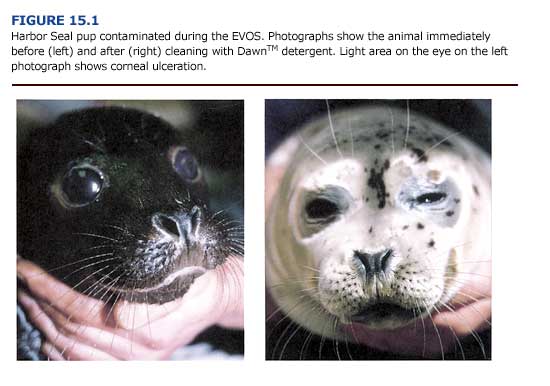
Fig15.1

Oil fouling of pelage can produce aberrations in thermoregulation. Species that rely primarily on fur rather than blubber for insulation are clearly the most vulnerable. Fur also provides an ideal matrix for oil entrapment. Oil not only subverts the ability of fur to trap an insulating layer of air next to the skin, it also removes the natural oils that contribute to the waterproof quality of the fur (St. Aubin, 1990a).

Thermal demands are greatest for polar and subpolar pinnipeds. However, these species depend primarily on blubber for insulation with the result that external contamination causes little thermoregulatory stress. This distinction applies to adult animals only, as most neonatal pinnipeds initially rely on lanugo for insulation until they develop an effective blubber layer. The degree to which the pelt is compromised might also differ in molting animals, which experience some degree of physiological stress at that time.

Studies that measured changes in heat conductance through pelts have shown up to a 50% decrease in the insulating value of fur seal pelts oiled in vitro. A smaller decrease was found in oiled pelts from Weddell seal pups, and virtually no change was reported for the relatively poor insulating pelts of sea lions, bearded seals, and ringed seals (0ritsland 1975; Kooyman et aI., 1976, 1977). These findings do not address adaptive responses, such as shivering, alterations in metabolic rate and changes in peripheral circulation that may alter the thermal balance of living animals.

(b) Eyes, Mucous Membranes, and Integument. Oil is an irritant and can produce acute changes to the mucous membranes of the eye, oral cavity, respiratory surfaces, and anal and urogenital openings. The extent of damage will depend on the duration of exposure and the volatility of the oil. Most reports of oil-fouled pinnipeds include descriptions of excessive lacrimation, acute conjunctivitis, swollen nictitating membranes, corneal opacity (Figure 15.1), abrasion, and occasionally ulceration (e.g. Lillie, 1954; Spraker et aI., 1994; Smith and Geraci, 1975). The latter authors noted that most signs subsided when the animals had access to clean water.

The integument is less sensitive to contact with petroleum hydrocarbons, and pathological changes have rarely been reported in this organ. This may be due to the limited amount of available data. However, it is clear that animals with sparse pelage, and perhaps those during the molt, would be most vulnerable. Johnson (1983) noted that the creviced skin of the walrus may present special problems. The degree to which hydrocarbons can be absorbed across the integument is unknown, but Engelhardt (1985) felt it was unlikely to make a longterm contribution to tissue burdens.

(c) Ingestion, Inhalation and Systemic Effects. Ingestion of petroleum hydrocarbons adhering to the body surface is of little concern to pinnipeds, which groom using their flippers rather than their mouth. Thus, pinnipeds are only likely to ingest oil by: 1) accidentally opening their mouths while swimming, 2) sucking from an oil fouled nipple or playing with contaminated debris, and 3) ingesting contaminated prey. The first two routes are unlikely to lead to significant intake, and the third only applies to pinnipeds such as walruses and bearded seals, which consume benthic invertebrates, prey items that are known to accumulate hydrocarbons (McLaren, 1990).

Three limited studies demonstrated that phocid seals fed small quantities of oil were not obviously affected, even though the oil was readily absorbed through the intestine and distributed to body organs (Smith and Geraci, 1975; Geraci and Smith, 1976; Engelhardt, 1982). Conversely, oil in the gut and other organs was considered the cause of death in some gray and harbor seals stranded in France (Babin and Duguy, 1985). A causative relationship was not established in the latter study because of the autolyzed state of the carcasses. Regardless, most data indicate limited ingestion of oil by pinnipeds and an ambiguous clinical expression of metabolic toxicity from the ingested oil.

Hydrocarbons can also be absorbed by inhaling vapors. Experiments have shown that pinnipeds can accumulate petroleum hydrocarbons up to several ppm in blood and tissue after exposure to petroleum vapors (Engelhardt et aI., 1977). Following the oil spill from the Sanko Harvest, volatile compounds (particularly acetone) in the blood reached levels of between 30-90 ppm in fur seals that encountered the oil within twenty-four hours of the spill. This compares with 10-20 ppm in those animals exposed to the oil after it had weathered for more than seventy-two hours. Presumably, most of the volatile compounds had dissipated by this time. The concentrations of straight chain petroleum hydrocarbons in these same animals were less than 1 ppm (Gales, 1991). Based on these studies, it appears that inhalation or perhaps dermal absorption, rather than ingestion, were the primary routes of exposure in the fur seals. Once again it was not possible to establish a causal relationship between the degree of exposure (as determined from petroleum hydrocarbons levels in the blood) and mortality or tissue pathology (Gales, 1991).

Likewise, harbor seal pups exhibited few pathologic injuries and low mortality despite heavy external oiling following the EVOS (T. M. Williams et aI., 1990, 1994). As found for sea otters, total paraffinic hydrocarbon concentrations in the blood were variable for the pups (Figure 15.2). Values ranged from 22 ppm to 260 ppm (mean = 91%B127 SE ppm, n = 9). Although some of the seal pups had blood hydrocarbon levels above the calculated lethal threshold dose for sea otters (Chapter 4), none showed evidence of systemic toxicosis and all survived. The comparatively high survivorship of the seal pups is undoubtedly related to many factors including: 1) age, 2) species-specific differences in the uptake, metabolism, excretion, and storage of petroleum hydrocarbons, and 3) oil weathering prior to contact (T. M. Williams et aI., 1990).
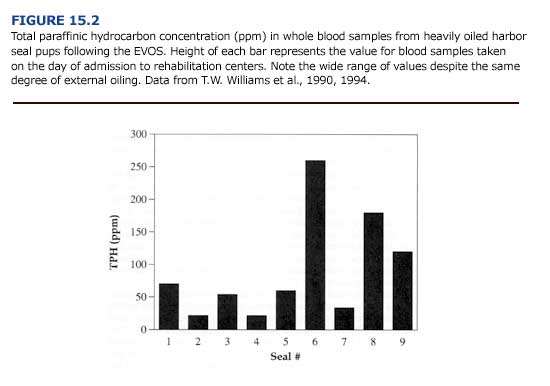
It is likely that pinnipeds can detoxify absorbed hydrocarbons in a manner similar to other mammals, but may suffer damage to various organs if blood or tissue levels reach critical thresholds (St. Aubin, 1990a). We will discuss pathological and clinical findings in a later section and refer readers to Neff (1990), St. Aubin (1990a), Frost et al. (1994) and Engelhardt (1985) for general details of petroleum hydrocarbon toxicity and clearance in pinnipeds.

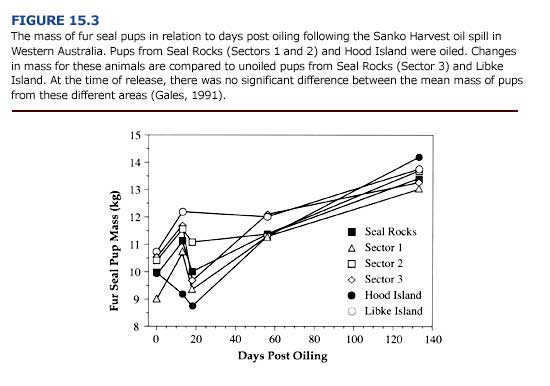
(d) Behavior. Oil spills can disrupt normal behavior by restricting movements to and from haulout sites. We do not know whether pinnipeds can detect oil, and if they can, whether or not they will avoid it. Although there is no experimental evidence that fouling with oil affects behavior in pinnipeds, there have been several anecdotal observations that infer some disturbances. Uncharacteristic swimming behavior, including vigorous head shaking, and swimming with the neck, head and trunk out of the water, has been noted in fur seals occupying a chronically polluted harbor (Shaughnessy and Chapman, 1984). Further, there is contradictory evidence that the mother-pup bond, for which scent appears to be an important component, may be disrupted. Observations of pup rejection by females has been noted, although the familial relationship between the observed animals was not known. Davis and Anderson (1976) reported that the mother-pup bond in gray seals was not affected by oiling, and noted that interrupting feeding to clean oiled pups may have had a greater impact on eventual mass at weaning than did the oiling itself. Heavily oiled New Zealand fur seal pups were observed nursing from females; there was no significant difference in the preweaning mass of heavily oiled pups and unoiled pups (Figure 15.3; Gales, 1991).

The behavior of different age classes of pinnipeds will determine their chances of encountering oil. For example, fur seal pups often congregate in tidal pools where there is little wave activity and oil can become trapped. The risk of fouling is greater for pups than for adults. Older animals tend to enter and leave the water in areas of higher wave activity where oil is physically repelled from the rocks. This basic difference in behavior explains why, after the sinking of the Sanko Harvest, an entire cohort of pups was contaminated, but no adults came into contact with the oil (Gales, 1991). There is clearly a need for quantitative studies to clarify the behavioral impact of oil fouling.

Polar Bears
A single laboratory study (0ritsland et aI., 1981) highlighted the vulnerability of polar bears to oil. Like sea otters and fur seals, polar bears depend on fur for insulation. Fouling of the coat increases heat loss, placing the animals in thermal stress. Polar bears also share the sea otter’s compulsion to maintain a clean coat, and will ingest any oil adhering to their fur. In two of three captive bears, the combined effects of metabolic stress and hydrocarbon toxicity had fatal consequences. Liver and kidney failure, anemia, and depressed lymphoid activity were noted. Secondary bacterial and fungal infections, which contributed to the animals’ demise, were evidence of stress-related impairment of immune function. It is unknown whether bears exposed in the wild would exhibit the same complications in the absence of the additional stress of captivity.

ch15-assessment

Assessment of Impact and Strategy

An oil spill that impacts marine mammals is a major media event, placing considerable pressure on wildlife managers and biologists to act with minimal time for adequate preparation and planning. Yet, the assessment and strategy planning component of any operation will determine the ultimate efficacy of the action taken. It is imperative that the aims of the rescue effort are clearly set. Any marine mammal rescue program must also take into account several important aspects of the species’ behavior and life history; these will dictate what can and should be done.

Pinnipeds and polar bears are amphibious animals with haulout patterns that vary seasonally. The threat of oil fouling will differ depending on whether the animals are in the marine or terrestrial phase of their life cycle. During the pelagic phase, the animals may simply abandon the area to avoid the disturbance associated with clean-up activities. At other times of the year, some species of pinnipeds spend several weeks on shore without entering the water thereby also avoiding exposure. The situation is more serious when animals are regularly crossing between land and sea through a transition zone that tends to accumulate oil. Pinnipeds are usually gregarious while on shore; any impact is therefore likely to be localized and involve many animals of all ages. The magnitude of the problem will vary enormously depending on how approachable, tractable, and susceptible to disturbance the affected species is. In cases involving large terrestrial congregations, the rescue operation may cause greater perturbation than the oil itself. Here, the benefits of cleaning animals must be carefully weighed against the potentially negative effects of disturbing the colony. Pressure from public expectation should not be allowed to influence decisions. Unless there is strong evidence that the animals will soon become recontaminated, we believe that it is better to treat and release the animals on site rather than to subject them to the stress of relocation or prolonged confinement in a rehabilitation center.

In establishing a realistic set of goals for the rescue operation, it may be necessary to limit expectations and focus on what is achievable and most beneficial to the affected group or population. If large numbers and multiple-age classes of animals are impacted by oil, it is unlikely that the entire group can be captured for cleaning and treatment. Thus, when a colony of breeding seals is affected, efforts should be directed towards accessible animals such as pups of the year. It may also be appropriate to focus attention on reproductively active females, rather than males, to minimize mortality among the animals most important to the long-term health of a population.

With this approach in mind, the following information is necessary before any action is taken:

1) Approximate number of affected animals, their age, sex, physiological state (e.g. molting, lactating, pregnant), distribution, and degree of mobility between marine and terrestrial habitats.
2) Approximate number of animals at risk.
3) Accessibility of the affected area and the potential to remove the risk of further contamination.
4) Availability of equipment necessary to capture, clean, house (either temporarily or for ensuing transport), and treat the oiled mammals.

It is assumed that efforts to remove oil from the environment are underway concurrently, and that no attempt will be made to release cleaned and treated animals until the potential for recontamination has been minimized or eliminated.

ch15-Capture and Restraint

Capture and Restraint

Methods for capturing pinnipeds have been described in the literature (Geraci and Lounsbury, 1993). These techniques are generally restricted to the smaller otariids and phocids. Most methods rely on the use of nets to capture individual animals. Alternatively, mass capture of several animals is possible and has been described for fur seals. Chemical capture and restraint has been extensively reported and recently reviewed for marine mammals (T. D. Williams et al., 1990). Telazol(R) (8-9 mg/kg) has proven to be reliable and safe for immobilizing polar bears under a variety of field conditions (Stirling et al., 1989).

The potential for physically or chemically capturing marine mammals will depend on the number of target animals, the number of nontarget animals, and the terrain. Capture is usually limited to the land or ice as capture techniques at sea are generally considered hazardous. Because of the difficulties, it is important to be realistic when selecting target animals. Adult seals and bears that are fouled with oil and capable of avoiding capture by rapidly entering the sea should probably not be captured. Their condition can be monitored visually, especially if they are marked with projectile paint pellets or another identifiable tag.

We recommend capturing unoiled animals for use as a control group. These animals are especially useful for establishing normal values for body mass, clinical state, and hematological and biochemical constituents. Such controls also enable the researcher or veterinarian to differentiate between anomalies caused by the oiling and those associated with disturbance by the cleaning method. Control animals should be marked for the duration of the study.

Many chemical compounds used for capture or immobilization interfere with thermoregulation, compounding the problems already faced by an oiled fur seal or polar bear. The greatest concern is for animals in polar and subpolar environments. Any type of capture or restraint will impose some form of stress, which must also be considered when handling these animals. Fortunately, pinnipeds and polar bears generally tolerate capture and transportation better than sea otters; they do not appear as susceptible to the capture myopathy or “capture stress syndrome” described for sea otters (Williams and VanBlaricom, 1989).

Once an animal has been captured, it may be necessary to retain it for detailed clinical evaluation, intensive treatment, or simply to await the removal of oil from its environment. In the latter instance, it is preferable to assemble holding pens on location for pinnipeds. Such pens must: 1) be designed for quick and easy construction, 2) have the intrinsic strength to contain the animals, and 3) adequately meet the behavioral and physiological needs of the species and age class to be held. Following the sinking of the Sanko Harvest, more than 200 New Zealand fur seal pups were held in five temporary pens constructed on two separate islands. The pens were made from chicken wire and averaged 5 m by 3 m in size, with a fence height of 1.2 m. Shade was provided by tarpaulins. These structures held the animals for up to two and a half days until the oil had been cleaned from the surrounding areas. Overcrowding in one pen led to the death of six pups, but otherwise the pens were adequate (Gales, 1991).

When permanent holding facilities are required (as with polar bears), it may be necessary to transport the animals from the capture site. Such undertakings are logistically challenging, but allow intensive study of the affected animals. A major problem associated with longterm holding of oil-fouled pinnipeds and polar bears is the stress associated with removing an animal from the wild. Even healthy individuals taken into captivity may experience difficulties during acclimation, particularly in learning to accept food. The problems are intensified if the animal is clinically compromised. Furthermore, some species and age groups are more adaptable than others. (See Chapter 1.)

ch15-clinical

Clinical Examination and Treatment

An initial clinical examination is required to determine if the animal should be:
1) released untreated,
2) cleaned of oil and released,
3) cleaned of oil, treated, and released, or
4) cleaned of oil and held in captivity for long-term treatment.

All animals should be temporarily marked, preferably with a color coded tag that identifies what level of attention they may need. Flipper tags (e.g. Jumbo rototags; Dalton-supplies, Heneley-on-Thames, England) are effective. Assessment should then address the following general categories, which were found to be useful in dealing with oiled New Zealand fur seals (Gales, 1991).

Degree of Oiling

An arbitrary scale of 0-5 may be used, where 0 represents no contamination and 5 represents complete coverage with oil.

Mass

This is used as an approximate index of nutritional status. Unlike sea otters, which have a high metabolic rate and depend on regular caloric intake (Costa and Kooyman, 1982), pinnipeds are physiologically capable of fasting. Thus, acute metabolic dysfunction such as hypoglycemia (Chapter 5) is less likely in pinnipeds. A reduced or zero caloric intake is manifested primarily as a decrease in mass in pinnipeds.

Measurement of mass is probably only practical in small pinnipeds. For larger animals, condition indices such as ultrasonic measurement of blubber thickness can be used. Mass can also be used to quantify recovery. Davis and Anderson (1976) demonstrated a decreased growth rate and a lower average peak mass for oiled gray seal pups compared with unoiled pups. Gales (1991) showed that oiled fur seal pups underwent a marked decrease in mass following the oiling event, but recovered to normal levels in 140 days (Figure 15.3).

Fig15.3

Clinical Signs

Hypothermia and/ or stress due to toxicosis can be recognized by shivering and a moribund or even comatose state. Core body temperature should be measured with a digital thermometer with a flexible probe. However, it is unlikely that core temperature will be as labile in pinnipeds and polar bears as it is in oiled sea otters. Respiratory injury, such as the interstitial emphysema reported for oiled sea otters (Chapter 5), has not been reported in pinnipeds. This may reflect a lack of sufficient monitoring of oil exposed pinnipeds, or a possible higher tolerance to pulmonary contact with petroleum hydrocarbons. Emphysema was recorded for one polar bear following experimental exposure to oil (0ritsland et al., 1981).

Dehydration is commonly observed in oiled wildlife. The degree of dehydration can be roughly assessed using a skin pinch test. In dehydrated seals and polar bears, the skin will remain raised for several seconds after pinching. This test is not definitive and is less appropriate for thick skinned pinnipeds with abundant subcutaneous blubber. Hematology can provide a more accurate measure of fluid balance. The degree to which an animal avoids capture and resists handling is also a good index of clinical state. Surface contact of oil on eyes and mucous membranes should be noted.

Treatment is initially based on clinical signs, and later on of clinical pathology results (see below). Irrigating eye washes and broad spectrum ophthalmic antibiotics should be used to treat eye injuries. Systemic fluid treatment administered subcutaneously or orally may be used when indicated. Ringer’s solution is appropriate for subcutaneous injection. Dextrose administration is only indicated in hypoglycemic animals.

ch15-cleaning

Cleaning Procedures

The selection of appropriate chemicals for cleaning fur or hair is often constrained by logistics, supply, and local availability. The use of Dawn detergent has been recommended for cleaning oiled sea otters (Chapter 6) and is probably appropriate for oiled pinnipeds (Figure 15.1) and polar bears. Another product that has proved effective is CT 18® concentrated cleansing gel (Chemtech Products, Australia). It is a neutral pH, nonionic detergent with a phosphate buffering system that works well in salt water and causes little irritation to skin and mucous membranes. Furthermore, it is a nonsolvent and biodegradable. Two washes with CT 18® removed 90% of the oil from fur seal pups, but left a detergent residue even after rinsing. The animals were subsequently sprayed with Preen Trigger Prewash Spray (Samual Taylor, Australia), and this powerful de greaser was massaged into the fur before being rinsed off. Preen® contains a low odor aliphatic hydrocarbon solvent and less than 20% by weight of a nonionic degradable surfactant (alcohol ethoxylates). Preen® successfully removed the detergent residue (Gales 1991).

Fig15.1

Davis and Anderson (1976) used several detergents on gray seal pups in Wales. They found that Winfield® detergent liquid and BP 1100X® were the most effective, although the latter was less effective against weathered oil.

To effectively clean an animal, the detergent must be thoroughly worked into the fur. This can be accomplished using a stiff bristled hair brush for both the washing and rinsing steps. The number of washes and rinses will depend on the effectiveness of the detergent and how much oil is on the animal. Oiled fur seal pups needed three wash-rinse cycles that took approximately thirty minutes per animal (Gales, 1991). A high volume supply of clean water greatly facilitates the cleaning procedure. In the field this can be achieved through the use of high pressure water pumps. Cleaning stations should be situated far enough from the major seal haul out site to minimize disturbance.

The need to dry the animals will depend on the ambient conditions. It is probably less critical to dry pinnipeds than the more thermally sensitive polar bears or sea otters.

Washing animals should only be attempted when the risk of recontamination has been removed or significantly reduced. Clean-up operations may be able to deal with oil on the shore more easily than on nursing mothers, which readily transfer oil to their pups. Davis and Anderson (1976) discontinued their cleaning efforts partly because of maternal recontamination.

ch15-Blood Analysis and Pathology

Blood Analysis and Pathology

Detailed postmortem examinations will greatly augment current deficiencies in our understanding of the pathophysiological effects of oil. To ensure high standards during specimen collection, all fresh carcasses should be examined under laboratory conditions whenever possible. Macroscopic and microscopic findings should be correlated with the clinical history of the animals. Serial blood samples from oiled and non-oiled animals yield potentially invaluable data that can be used to direct treatments and subsequently to document the nature of the impact.

Blood should be collected into three types of sterile containers:

  1. 15% EDTA anticoagulant for hematology,
  2. potassium oxalate anticoagulant for measurement of petroleum hydrocarbons, and
  3. no anticoagulant for serum biochemical analysis. A full profile for routine hematology and plasma biochemistry should be run for all samples. Constituents that are sensitive to stress are particularly important. Cortisol, serum iron and erythrocyte sedimentation rate were useful indicators of stress in sea otters (Williams and Davis, 1990). However, individual variation in baseline values may mask some of the stress-related changes. A large sample of control and oiled animals may be needed to establish differences between the groups. In phocid seals, aldosterone and sodium are particularly useful measures (St. Aubin and Geraci, 1986).

Oiled fur seal pups showed a typical stress leukogram. Marked leukocytosis, due to a neutrophilia, with a concomitant lymphopenia and eosinopenia, was noted in pups at the time of oiling; the leukogram returned to normal ranges within two months (Gales, 1991). No other hematological or serum biochemical change signalled systemic toxicosis or organ dysfunction following oil exposure (Gales, 1991). This contrasts markedly with the results for sea otters (see Chapter 5 and Appendix 3 Download PDF).

Petroleum hydrocarbon levels in blood can indicate the degree and route of absorption. Straight chain hydrocarbons are absorbed through the gut, whereas aromatic compounds are absorbed primarily by inhalation, and to a much lesser extent through the skin. For most marine mammals, there is little background data on circulating levels of petroleum hydrocarbons. Interpretation of any findings after oil exposure rests on the assumption that such compounds are normally undetectable. Observations on the dynamics of petroleum hydrocarbon levels in blood will greatly assist future attempts to understand the significance of such data.

ch15-Post-Release Monitoring and Summary

Post-Release Monitoring and Summary

Monitoring released pinnipeds and polar bears is critical for deter-mining the effectiveness of any clean up operation, as well as the overall impact of the oil on individual animals and the population as a whole. In some instances (e.g. nursing seals), visual recaptures may suffice. However, it is more likely that radio or satellite transmitters will be needed to follow widely ranging pinnipeds or polar bears. Such en-deavors are expensive but represent an investment as critical as the original clean up effort, and the costs must be incorporated into the restoration plan from the outset.

Whenever possible, recaptures of previously oiled and nonoiled animals should be included in any follow-up plan. These recaptures can be used to assess the condition of the fur or hair, measure body mass, and collect blood samples for clinical pathology and circulating hydrocarbon levels. Breeding colonies of pinnipeds should be moni-tored during subsequent pupping seasons to determine the long term effects of oil contamination on reproduction.