ch6-post

Post Cleaning of the Fur

After cleaning with detergent, the sea otter’s fur may not immediately regain its water repellent quality, even after conditioning with squalene. This may result from:
(1) incomplete restoration of normal concentrations of squalene in the fur and skin,
(2) absorption of detergent by the keratin in the cuticle and cortex of the hair which makes the surface of the hair hydrophilic (water absorbent) and lowers the effective surface tension, or
(3) mechanical disruption of the underhairs so that they no longer form a tight, interlocking network that traps air.

Normal grooming behavior by the otter and the gradual reintroduction to water usually results in full restoration of the fur in seven to ten days. Allowing the otter to groom in water is essential for full recovery. However, it may become chilled and should be monitored closely by the husbandry staff. If the otter begins to shiver or becomes lethargic, it should be removed from the water immediately and dried with a commercial pet dryer.

Recovery

Grooming aligns the underhairs so that they trap air and probably stimulates the production of sebum, which may restore the water repellency of the hair cuticle. Otters usually groom their head and chest first, then proceed to their back and abdomen. Grooming behavior includes rubbing the fur with the forepaws and hind flippers, tumbling and rolling in the water, and blowing air into the fur with the nose. Occasionally, otters will groom each other. As the underhairs become interlocked and the air layer is restored, the fur will become noticeably water repellent and will regain its normal appearance. The percentage of the otter’s fur that has regained its normal water repellency should be visually estimated and recorded daily in the husbandry record (Appendix 2, Form J Download PDF). Otters that fail to groom properly because of poor health or aberrant behavior associated with the stress of captivity will not restore their fur to normal. Consequently, they will need veterinary care and a low-stress environment to resume normal grooming behavior in the rehabilitation center.

ch6-summary

Summary

Sea otters have a very dense fur that traps air and provides thermal insulation in water. This insulation is lost when an otter comes into contact with oil. To restore the fur’s insulating air layer, it must be cleaned thoroughly, rinsed well to remove residual detergent, and dried. Finally, the otter must groom itself to restore the fur’s full water repellency, a process which may take several weeks. The application of conditioners may accelerate this process, but further research is needed to determine the effectiveness of this procedure.

ch6-lit

Literature Cited

Davis, R. W., T. M. Williams, J. A. Thomas, R. A. Kastelein, and L. H. Cornell.1988. The effects of oil contamination and cleaning on sea otters (Enhydra lutris). II: Metabolism, thermoregulation and behavior. Canadian Journal of Zoology 66:2782-90.

Ebling, F. J., and R A. Hale. 1983. ‘Hormones and hair growth.’ In Biochemistry and physiology of the skin, part IV, section A. L. A. Goldsmith, ed., 522-52.New York: Oxford University Press.

Gillespie, J. M. 1983. ‘The structural proteins of hair: Isolation, characterization, and regulation of biosynthesis.’ In Biochemistry and physiology of the skin, part IV, section A. L. A. Goldsmith, ed., 475-510. New York: Oxford University Press.

Swift, J. A. 1977. ‘The histology of keratin fibers.’ In Chemistry of natural protein fibers. R. S. Asquith, ed., 81-146. New York: Plenum Press.

Tarasoff, F. J. 1974. ‘Anatomical adaptations in the river otter, sea otter, and harp seal with reference to thermal regulation.’ In Functional anatomy of marine mammals. R. J. Harrison, ed., 111-42. London: Academic Press.

Tregear, R. T. 1965. Hair density, wind speed and heat loss in mammals. Journal of Applied Physiology 20:796-801.

Williams, T. D., D. D. Allen, J. M. Groff, and R. L. Glass. 1992. An analysis of California sea otter (Enhydra lutris) pelage and integument. Marine Mammal Science 8 (1): 1-18.

Williams, T. M., R. A. Kastelein, R. W. Davis, and J. A. Thomas. 1988. The effects of oil contamination and cleaning on sea otters (Enhydra lutris). 1:Thermoregulatory implications based on pelt studies. Canadian Journal of Zoology 66:2776-81.

ch7-intro

Chapter 7 – Introduction

Specific requirements have been established under the Animal Welfare Act (AWA) by the United States Department of Agriculture (USDA, 1992) for the care of captive sea otters and other marine mammals. These regulations pertain to the long-term captivity of animals in aquaria and zoos. Marine mammals taken into custody for treatment of oil contamination are not considered captive animals under the AWA, because they are being held for veterinary treatment and eventual release to their natural habitat (USDA Regulatory Enforcement and Animal Care Memorandum No. 210). Despite this exemption, the USDA standards should be used when planning rehabilitation facilities and caring for oiled sea otters.

The purpose of this chapter is to describe husbandry techniques that will minimize stress and achieve the highest levels of sea otter well-being in the rehabilitation center. Good husbandry is accomplished by providing for the animal’s physiological needs, safety, and behavioral needs. Physiological needs include proper nutrition, an appropriate thermal environment, good sanitation, and disease control. Providing for the otter’s safety and behavioral needs involves proper techniques of handling and transport, the placement of animals in compatible social groups, and appropriately designed cages, pens and pools.

ch7-cages

Cages, Pens, and Pools

Sea otters may be housed in portable cages, pens, pools, or floating pens, depending on their health and the condition of their fur. The rehabilitation process can be divided into three phases, each with its particular type of housing: critical care, recuperation, and rehabilitated and awaiting release.

Critical Care

Portable cages with top and side-mounted, sliding doors (Figure 7.1) should be used to hold sea otters during triage, while they recover from sedation, and when they are seriously ill and require frequent veterinary care. These cages are normally used in the triage room and critical care room of the rehabilitation facility (see Chapter 12) and may be used to transport sea otters over long distances. The cages should be made of smooth fiberglass and have a removable rack that allows the passage of water, feces, and urine into the cage bottom. The interior surfaces of the cages should be rounded to prevent the sea otters from damaging the cage or breaking their canine teeth. The windows should be covered with four-inch, stretch mesh net (0.12 inch braided nylon cord). Each cage should be equipped with handles at the corners (placed away from the windows) to allow the staff to safely carry the caged otter to various areas in the facility.
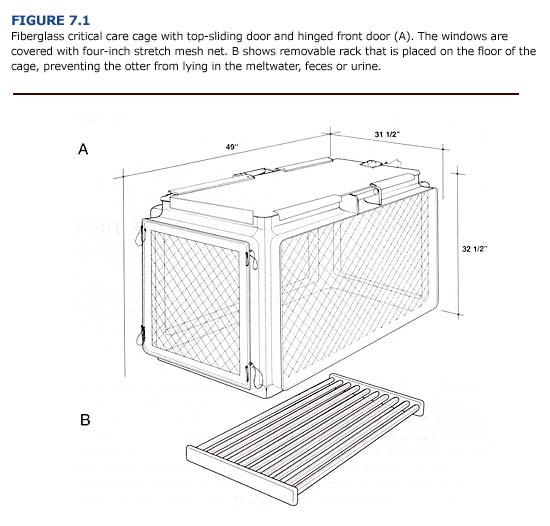
Fig7.1

The critical care room should be well ventilated to reduce humidity and odors, and climate controlled to maintain a temperature of 15°C (60°F). When weather permits, sea otters recovering in critical care cages can be placed outdoors with appropriate provisions for shade and windbreaks.

Recuperation

Sea otters should be moved to pens with seawater pools (Figures 7.2 and 7.3) as soon as they are eating, can maintain a stable core temperature, and have no other serious clinical disorders. These pens, which can hold two adult sea otters, are made of fiberglass and have four doors so that husbandry personnel can quickly net an animal when clinical care or relocation is required. As with the critical care cages, the interior surfaces should be rounded to prevent broken teeth. The large windows and doors, which are covered with four-inch stretch mesh net (0.12 inch braided nylon cord), provide good ventilation. The pliable net also prevents the otters from damaging their teeth and gums if they bite it.
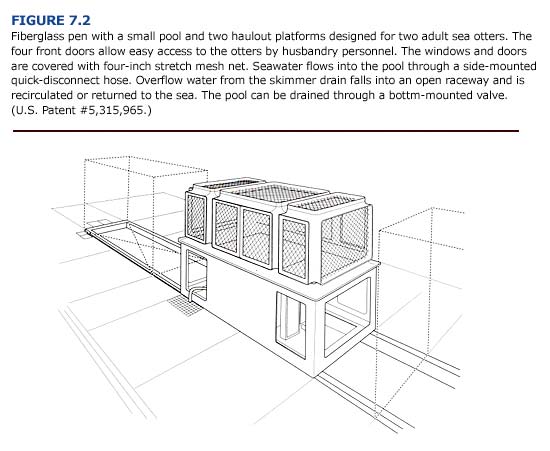
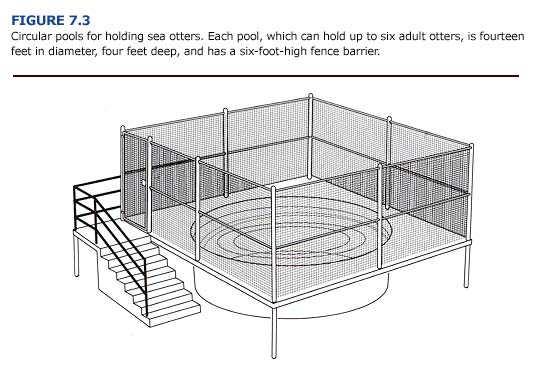
Fig7.2
Fig7.3

The pens should be located outdoors in an area with low visual and acoustic disturbance. In Alaska, or where air temperatures drop below freezing, pens may be placed in a climate-controlled indoor area and used for otters that are unable to maintain a normal stable core body temperature.

The seawater pool in each pen should be large enough (3 feet square and 2 feet deep) to allow the otters to perform normal grooming behaviors such as rolling and tumbling. This behavior is essential for the restoration of the fur (see Chapter 6). Because otters defecate frequently, the seawater flow into the pools should result in one complete turn- over every thirty minutes (i.e. about 5 gallons per minute in a 150 gallon pool) to prevent fouling the fur and high concentrations of coliform bacteria. The pool should have surface-skimming drains to eliminate floating debris. Clean seawater should be used in the pens and pools to promote the optimum recovery of the fur. If the seawater supply to the pens and pools is recirculated, it must be filtered and sterilized by chlorination or ozonation (see Chapter 12). Because chlorine will damage the otter’s fur, the water must be dechlorinated before it is returned to the pens and pools. Non-chlorinated fresh water can be used for several days if seawater is unavailable, but the long-term effects of holding sea otters in fresh water are unknown.

The pool seawater temperature should be similar to ocean temperatures representative of the season and the sea otter’s geographical home range. However, severely debilitated otters that have lost the thermal insulation of their fur will chill rapidly in cold water. Warming the pool water to 20°C (68°F) with a heat exchanger may allow otters with damaged fur to groom for longer periods before they begin to chill. In theory, this could decrease the rehabilitation time. As the otters restore the water repellency of their fur, the water temperature should be lowered gradually to the normal ocean temperature for that region. Most facilities are unable to regulate seawater temperature, so the potential benefits of warming seawater in the pens remain untested.

The haulout platforms in the pen should be made of fiberglass that is smooth and has beveled holes (0.4 inches in diameter spaced every 3 inches) for water drainage. The haulout area should be large enough (1.7 feet wide by 3.5 feet long) for an adult otter to move about comfortably and continue grooming after emerging from the water. A removable lid of smooth fiberglass should be placed over the pool to prevent the otter from reentering the water if it becomes chilled or when the air temperature is excessively cold.

Recuperating otters may spend much of their time on the haulout platforms and are prone to abrasions and decubital sores, especially on the flippers and rear legs. A smooth, perforated surface lessens the incidence of these lesions. Materials such as wire mesh, plywood, rigid plastic grate, and indoor-outdoor carpeting are unsatisfactory. Once sores appear, they usually persist until the otters are able to spend the majority of their time in the water.

Otters that are eating well, show normal grooming behavior, are able to thermoregulate in seawater at ambient temperatures, and have no other health problems should be moved to larger outdoor pools. The larger area allows the otters to swim, dive, groom, and socialize more actively than in the smaller pen pools. These outdoor pools are circular (14 feet in diameter and 4 feet deep) and can hold up to six adult otters. Smooth haulout areas (3 feet wide) should be provided around the perimeter of the pools. The design should allow the husbandry staff to net an otter easily if clinical treatment is required. The seawater supply should result in one complete turnover every thirty minutes to prevent high concentrations of food, fecal debris, or coliform bacteria.

Sea otters that have been cleaned of oil may successfully restore the water repellency of their fur in one to two weeks (see Chapter 6). Normal grooming behavior is an essential part of the rehabilitation process. Not surprisingly, otters that have been heavily oiled or have other serious health problems may not groom effectively and will require additional time to restore their fur. Improper sanitation or inadequate seawater turnover also will delay recovery.

Rehabilitated and Awaiting Release

As soon as oiled sea otters have regained their health and the water repellency of their fur, they should be moved to a prerelease facility. The prerelease facility consists of large, floating pens (see Chapter 12) located in a clean bay or lagoon with good seawater circulation. Each floating pen should be sufficiently large (at least 18 feet long, 10 feet wide and 5 feet deep) for the otters to actively swim and dive to regain their stamina, muscle tone, and respiratory capacity. On average, each otter should have at least thirty square feet of surface area in the floating pen and six square feet of haulout space.

Animal Care

The otters should be monitored twenty-four hours a day by qualified personnel who are familiar with normal sea otter behavior and can recognize clinical signs of distress. Monitors should be assigned to specific animals or pens (one to four otters in critical care or up to ten animals in the pools and pens). They are responsible for feeding, record keeping (Appendix 2, Forms J-Q Download PDF), maintaining cleanliness, and ensuring that the otters are able to groom effectively. Abnormal behaviors should be noted and corrective action taken immediately.

Animals should be handled by trained personnel and only when necessary for transport, treatments, or sanitation. The physical and chemical restraint of sea otters is described in Chapter 3. During routine husbandry procedures that require moving an otter from one cage or pen to another, the staff should use a large dip net fitted with a soft mesh net (4.5-inch stretch mesh). Otters should be weighed during these transfers by suspending the net from the hook of a hanging spring scale. Alternatively, the otter can be placed in a cage and weighed on a platform scale. An otter’s weight may vary by several pounds, depending on whether the coat is wet or dry. Weighing an otter only when dry or noting a “wet weight” will avoid confusion in the animal’s record.

The husbandry staff should avoid loud talking or socializing near the pens and should observe the otters from a distance or behind a blind to reduce stress on the animals. At the same time, adequate access to the pens is needed for monitors to feed and assist debilitated animals.

It is imperative that the fur remain clean and free from contamination by food or excrement. If an otter in the critical care cages becomes soiled, it should be rinsed in the cage with fresh water or seawater from a low pressure hose. Haulout platforms also should be rinsed of food or feces, and all nets, gloves, and transport cages thoroughly cleaned between use.

Hypothermia is a potentially fatal complication when otters are held out of water (see Chapter 5). In the critical care cages, as soon as otters are dry and no longer at risk of hypothermia, about one-third of the cage floor should be covered with several inches of clean, chipped ice to prevent overheating. Ice helps to prevent pressure sores and keeps the otter’s fur clean. Sea otters like to chew on ice, and this behavior also may alleviate stress and dehydration. Cool water sprays may be used to prevent overheating and shade should be provided when necessary in outdoor areas.

Otters that become chilled in seawater pools or pens, have difficulty hauling out, or experience seizures should be removed from the water with dip nets. If an otter appears hypothermic (begins to shiver violently or becomes lethargic) it should be placed in a critical care cage or confined to a haulout, dried with room temperature air from pet dryer, offered food, monitored for signs of abnormal behavior, and evaluated by a veterinarian.

Rehabilitated otters awaiting release require only a small husbandry staff (one person for ten otters) to feed and monitor them, maintain sanitation, and provide for security. Under normal circumstances, prerelease otters should be handled only when introducing or removing them from a pen, or for occasional clinical procedures.

Toys

Grooming behaviors will occupy most of the time spent by sea otters in the rehabilitation facility. However, otters near recovery appear to benefit from access to objects they can chew and manipulate. Blocks of ice, clam shells, kelp, or artificial toys may all serve to occupy them and satisfy their need to manipulate objects in their environment. Artificial objects (pet chew-toys or net buoys) should be large and tough enough to avoid accidental ingestion.

Social Grouping

When placing sea otters in pens or pools, consideration must be given to social groupings. Otters are naturally gregarious animals that frequently gather into large rafts of up to several hundred individuals in favorable feeding or resting locations. Grouping otters within a rehabilitation facility appears to increase grooming activity and appetite, and reduce signs of stress. Even visual contact between sea otters can be beneficial, but housing two or more compatible animals in a pool or pen is preferred.

Adult males and females should be separated to prevent injury to females during copulation. Juveniles of both sexes can be held with mature females. Placement with these older animals often results in bonding, which mimics natural social patterns and may help younger animals learn normal behaviors prior to release. Dominant males may fight if two or more are placed in the same pen or pool with females; however, groups of up to twenty males have been held in large floating pens without problem (Tuomi, 1990). Pregnant females and females with pups need to be housed in smaller groups and observed more closely (see Chapter 8). Once formed, social bonding appears to contribute to the health and well-being of otters in the rehabilitation facility. Movement of otters out of stable groups should be avoided until final release.

Transport

During short duration (less than six hours) transport outside of the rehabilitation facility, otters should be placed in kennel cages equipped with a durable, tight fitting rack made of PVC pipe (1.5-inch-diameter spaced one inch apart) in the bottom. The rack should be at least two inches above the floor of the cage to allow water, urine, and feces to fall away from the otter. Chipped or block ice should be placed in the cage to prevent overheating and as a source of fresh water. For long trips (six to forty-eight hours), the otters should be transported in the critical care cages (Figure 7.1). The top-mounted sliding doors allow easy access to the animals by a veterinarian or animal care specialist. Adequate food and ice should be carried in an ice cooler during transport so that the otters can be fed every three hours. Spray bottles of water should be used to flush food, feces, or urine from the fur as needed and to prevent overheating. The air temperature in the vehicle or aircraft should be maintained below 15°C (60°F) (Williams, 1990).

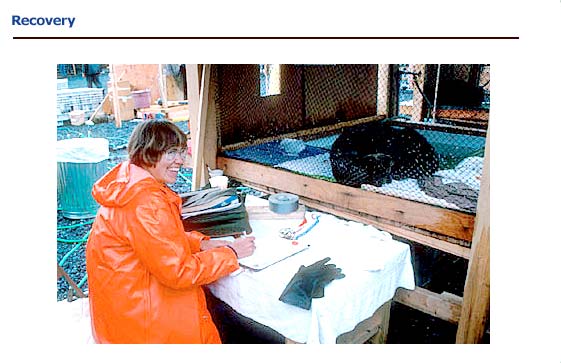
Fig7.1

ch7-nutrition

Nutrition and Food Preparation

Nutritional Requirements

Sea otters arriving at a rehabilitation center will vary in nutritional condition. Even healthy wild otters have very little body fat and must consume about 25% of their body weight daily in high protein prey items. This high level of consumption is necessary for the otter to maintain a metabolic rate, which is two to three times higher than a terrestrial mammal of the same size. Oil contamination of the fur requires a further increase in metabolism to offset the additional heat loss. This may cause the otter to go into negative caloric balance and to lose weight (Costa and Kooyman, 1982; Davis et al., 1988).

Complicating this scenario, sea otters may be unable to feed normally after an oil spill for several reasons. They may be preoccupied with grooming their contaminated fur and spend less time looking for food. Severe chilling when in the water may prevent normal foraging behavior or force them to go ashore where food is unavailable. Oil contamination of intertidal prey species and oil spill response activities may displace otters from their normal foraging areas (Doroff and Bodkin, 1994). Oil ingestion and stress may cause gastrointestinal inflammation, ulceration, and diarrhea, which interfere with the complete digestion and absorption of food.

Data from hospitalized domestic animals shows that they undergo a series of metabolic adaptations following severe illness or injury, (Donoghue, 1989). A lowered metabolic rate occurs during the first twenty-four to forty-eight hours after a life threatening stress, follow (by a period of elevated metabolism which peaks in about four days, and lasts for two to four weeks. The same metabolic changes appeared to occur in oiled sea otters during the Exxon Valdez oil spill (EVOS). Those arriving at the rehabilitation center often showed little interest in food. However, as they began to regain their health and normal appetite, they consumed 30-50% of their body weight in food daily

When sea otters arrive at the rehabilitation center, their body condition and immediate nutritional needs should be assessed during initial clinical evaluations (see Chapter 4). Serious health problems (hypoglycemia, dehydration, etc.) will occur in animals that have not eaten adequately. These otters will require immediate medical treatment (see Chapter 5). Animals that are not heavily oiled and who health is stable should be allowed to rest and should be fed for twelve to twenty-four hours prior to sedation and cleaning; this will lessen the stress of capture. During this period, they should be offered familiar food such as clams and crabs. Food should be withheld one to two hours before sedation to prevent vomiting or regurgitation.

Diet and Food Preparation

Sea otters should be fed a variety of seafoods including shrimp crabs, clams, fish, squid, mussels, sea urchins, and abalone (Tuomi 1990). The caloric value of foods frequently consumed by sea otters during the EVOS are presented in Table 7.3. The percentage of water in these foods is quite high (66-83%). Protein contributes more than 70% of the calories for all items except salmon. By comparison, cat food is typically 25-35% protein and dog food is 18-32%. Only 10- 20% of the calories in a sea otter’s diet are from fat and almost none from carbohydrates.

To estimate the daily food consumption of a healthy otter, multiply its body weight by 0.25 and then divide this amount into five feedings spaced about three hours apart. Food should not be offered late at night, allowing undisturbed rest time. Otters in a hypermetabolic state should be offered as much food as they are willing to consume at each feeding. Once they have regained their health, they should be placed on a normal maintenance diet, about 25% of their body weight daily. However, this should be adjusted for individual animals so that they maintain body weight.
Freezing seafood is thought to reduce the transmission of parasites (Sweene 1965) and is convenient for purchase and storage. Fresh seafoods may be used, if the quality can be assured and facilities available to properly hold and process these foods. Staff should be trained in the proper handling of seafoods (human food sanitation standards) to ensure that food remains nutritious and uncontaminated (Ferrante, 1990).

The rehabilitation facility should have adequate freezer space to store at least a three-day supply of frozen seafood (Chapter 12). For a facility with 200 adult sea otters, the freezer should be able to hold 9,000 pounds of seafood. Frozen seafood should be thawed in air or cold water and used within several hours to avoid spoilage. Seafood should never be thawed in hot water, as this promotes bacterial growth. The food should be preweighed (one pound portions are convenient), placed in plastic bags, and kept chilled on ice until used. Preweighing food into bags makes it easier for the animal caretakers to estimate amount eaten by each otter. Uneaten food should be discarded after six hours.

Vitamin supplementation should be attempted for all captive otters. However, otters are adept at locating vitamin tablets hidden in food, and will often refuse to accept food that has been altered by supplements. Muffins containing krill and vitamins have been used at the Seattle Aquarium (Qtten-Stanger, personal observation). SeaTabsTm vitamins are available commercially and tolerated well by most marine mammals.

Roughage

Even with good sanitation and attention to nutrition, recuperating otters often develop diarrhea. The causes are varied and difficult to determine. Sea otter feces is commonly mucoid and poorly formed, especially when the shells or carapace of food items are excluded from the diet. Because defecation usually takes place in the water, detecting true diarrhea can be difficult, especially for observers not accustomed to normal sea otter eliminations. Overfeeding may contribute to diarrhea. The passage of undigested pieces of food, straining during a bowel movement (occasionally resulting in a prolapsed rectum), and bloody or tarry stools should be reported to the veterinarian.

Increasing roughage in the form of shells or carapace from whole food items such as mussels, crabs, and shrimp produces a more formed stool (Figure 7.6). The indigestible portions act as binders in the feces and may contribute to the mineral nutrition of the otters. This roughage may be removed for animals with gastrointestinal hemorrhaging, but may result in unformed feces that cannot be distinguished from diarrhea.

Methods of Feeding

Sea otters in critical care cages or fiberglass pens. should be hand fed by offering individual pieces of food with long-handled tongs. Food should never be offered to an otter using the bare hands; this may introduce food-borne pathogens, and the otter’s sharp claws and strong jaws can inflict serious injury. Food may be placed (in preweighed portions) into stainless steel feeding bowls placed on haulout platforms in the pools and larger pens. Rehabilitated otters in floating pens should be fed by throwing food into the water, or by placing the food in a bucket or basket that is submerged. This will encourage the otters to swim and dive for their food and will reduce the perception of the husbandry staff as a food source.

An accurate record of the type and amount of food eaten by each otter (Appendix 2, Forms K and L Download PDF) is important for monitoring the animal’s recovery. Most otters will readily accept food and rapidly adapt to various feeding routines. A variety of seafood should be consumed to ensure adequate nutritional intake. Some otters develop a preference for certain foods and should be encouraged to eat other items. Subordinate otters may need additional food offered to them after other animals in the group have finished eating.

An otter refusing food for more than one feeding or eating less than 10% of it’s body weight each day may indicate serious health problems and warrants immediate attention by a veterinarian. In the large holding pens, it is not possible to determine the exact food consumption of each animal, but husbandry staff should note any animal that does not appear to be eating. An otter that does not feed adequately should be moved to a different pen or to a critical care cage for observation and clinical treatment. Tube feeding may be necessary for severely anorectic sea otters (see Chapter 5).

ch7-water

Water Quality, Cleanliness and Disease Prevention

Water quality is very important for successful rehabilitation. If untreated seawater is used in the facility, it should be obtained from area that are uncontaminated by chemical or biological waste. Recirculating seawater systems should be professionally engineered and have adequate filtration and sterilization (chlorination followed by dechlorization or ozonation) to keep the water clean and bacteria-free. To further guard against disease transmission, the recirculating seawater systems of pens and pools should be completely separate (see Chapter 12). If other species of animals are held in the same facility, those pools also should have separate seawater systems. Water flow to the pens and pools should be sufficient so that the entire volume is replaced every thirty minutes. Coliform bacteria concentrations in every pool should be monitored weekly and should not exceed 1,000 colonies per 100 ml of water (USDA, 1992). If treated fresh water is used in the pens or pools, it must be dechlorinated.

Cleanliness

Leftover food, shells, and feces should be removed from pens and cages with small hand-held nets; surfaces should be rinsed with water several times daily. As otters are moved, or at least every three days, enclosures should be drained and washed with detergent, disinfected with dilute chlorine bleach (one part bleach to thirty parts water) to kill bacteria and algae, and then rinsed to remove all residues. Gloves, dip nets, and other equipment should be disinfected by daily soaking in dilute chlorhexidine (NolvasanTm). Food containers and utensils should be washed with detergent, soaked in dilute bleach as above, and then thoroughly rinsed between each feeding. The husbandry staff should wear rubber gloves when handling food, bedding, or waste. This is for their own protection and to prevent contamination.

Rehabilitation facility visitors should be restricted and domestic pets excluded at all times. Footbaths containing dilute bleach or chlorhexidine should be used at the facility entrance to prevent the formite transmission of disease. Coveralls issued within the center should be worn over regular clothing, and street shoes should be exchanged for rubber boots before beginning work. These garments should be cleaned after each shift. Personnel should wash their hands with povidone iodine or chlorhexidine hand soap regularly; this is especially important before and after handling otters or their food, and after cleaning pens. Sinks, showers, and appropriate disinfectants should be provided at strategic locations.

Disease Prevention

Information on the naturally occurring contagious diseases of all marine mammals is minimal and often incomplete. Clinical signs, routes of transmission, incubation periods, and testing procedures have been partially described for a handful of clinical syndromes such as San Miguel sea lion virus, Erysipelas, Vibriosis, and a few pox viruses. Leptospirosis has been implicated as a cause for chronic renal disease in sea lions along the California coast and for a hemorrhagic perinatal syndrome in Northern fur seals (Dunn, 1990). Other species of mustelids are susceptible to domestic animal diseases including canine distemper, feline panleukopenia, leptospirosis, toxoplasmosis, and rabies (Fowler and Theobald, 1978; Wallach and Boever, 1983). None of these diseases has been documented in sea otters, but the possibility of introducing an infection to an immuno-compromised group of sea otters in the rehabilitation center should be considered. Enhanced serum antibody titers to Salmonella, Vibrio, and Pasteurella bacterial pathogens were detected in sea otters during the EVOS (Wilson et al., 1990), possibly as a result of food contamination during captivity. Harris et al. (1990) have reported finding oral ulcers, associated with an apparent herpes virus, at one of the EVOS rehabilitation centers. These oral ulcers were later found to occur naturally in the sea otter population of Prince William Sound.

When sea otters first arrive at the rehabilitation center, they should be held in individual critical care cages and observed for signs of contagious or infectious disease before being moved into pens with other otters. This procedure should reduce the risk of introducing disease, but it can be difficult to accomplish under emergency conditions. Strict disinfection of transport kennels, cages, pools, food- handling utensils, and restraint equipment must be enforced. Animals should be moved as rapidly as possible through the rehabilitation process and constantly monitored for possible signs of contagious disease. Quarantine procedures should be instituted if an infectious or contagious disease is suspected.

Sampling programs such as coliform counts, hematology, serology, bacteriologic, fungal and viral cultures, and the results of necropsy examinations should be utilized to alert staff to potential disease problems. The usefulness of some tests is often quite limited. Specific serologic tests may be inaccurate in species other than those for which the tests were designed. Negative results may create a false sense of security and should not be allowed to justify deviations from disease prevention control protocols and strict quarantine procedures within the rehabilitation facility.

ch7-summary

Summary

The goal of good husbandry is an environment that enables oiled sea otters to regain health and restore their fur so they can be released as soon as possible. However, the stress of captivity can be as debilitating and life threatening as the effects of oil. Husbandry protocols should minimize this stress by providing:

1) properly designed housing with access to clean seawater,
2) appropriate ventilation and temperature control,
3) good nutrition,
4) minimal visual and acoustic disturbance,
5) socialization with other otters,
6) a sanitary and disease-free environment, and
7) minimal handling by husbandry personnel.

Husbandry personnel should recognize abnormal sea otter behaviors and the clinical signs of distress so that corrective measures can be taken immediately.

ch7-lit

Literature Cited

Costa, D. P., and G. L Kooyman. 1982. Oxygen consumption, thermoregulation, and the effects of oiling and washing on the sea otter (Enhydra lutris). Canadian Journal of Zoology 60 (11): 2761-67.

Davis, R. W., T. M. Williams, J. A. Thomas, R. A. Kastelein, and L. H. Cornell. 1988. The effects of oil contamination and cleaning on sea otters (Enhydra lutris). 11: Metabolism, thermoregulation, and behavior. Canadian Journal of Zoology 66 (12): 2782-90.

Donoghue, S. 1989. Nutritional support of hospitalized patients. Veterinary clinics of North America: Small animal practice 19 (3): 475-05.

Doroff, A. M., and J. L. Bodkin. 1994. %26quot;Sea otter foraging behavior and hydrocarbon levels in prey.” In Marine Mammals and the Exxon Valdez. T. R. Loughlin, ed. 193-208. San Diego: Academic Press, Inc.

Dunn, J. L. 1990. ‘Bacterial and mycotic diseases of cetaceans and pinnipeds.’ In CRC handbook of marine mammal medicine: Health, disease and rehabilitation. L. A. Dierauf, ed., 73-88. Boca Raton: CRC Press.

Ferrante, P 1990. ‘Food procurement and feeding of sea otters during the T/ V Exxon Valdez oil spill.’ In Sea otter symposium: Proceedings of a symposium to evaluate the response effort on behalf of sea otters after the TIV Exxon Valdez oil spill into Prince William Sound, Anchorage, Alaska, 1-1 9 April 1990. K. Bayha and J. Kormendy, eds. U.S. Fish and Wildlife Service Biological Report 90 (12): 321-22.

Fowler, M. E., and J. Theobald. 1978. ‘Immunizing procedures.’ In Zoo and wild animal medicine. M. E. Fowler, ed., 614. Philadelphia: W. B. Saunders.

Harris, R. K., R. B. Moeller, T. P. Lipscomb, R. J. Haebler, P. A. Tuomi, C. R. McCormick, A. R. DeGange, D. Mulcahey, T. D. Williams, and J. M. Pletcher. 1990. ‘Identification of a herpes-like virus in sea otters during rehabilitation after the T/V Exxon Valdez oil spill.” In Sea otter symposium: Proceedings of a symposium to evaluate the response effort on behalf of sea otters after the T/V Exxon Valdez oil spill into Prince William Sound, Anchorage,, Alaska, 1-19 April 1990. K. Bayha and J. Kormendy, eds. U.S. Fish and Wildlife Service Biological Report 90 (12): 366-68.

Kenyon, K. W. 1969. The sea otter in the Eastern Pacific Ocean. North American Fauna 68:1-325.

Kvitek, R. G., C. E. Bowlby, and M. Staedler. 1993. Diet and foraging behavior of sea otters in southeast Alaska. Marine Mammal Science 9 (2): 168-81.

Pennington, J. A. T, and H. N. Church. 1985. Bowes and Church’s food values of portions commonly used, 14th ed. Philadelphia: J. B. Lippincott Co.

Reidman, M. L., and J. A. Estes. 1990. Sea otter, Enhydra lutris: ecology, behavior, and natural history. U.S. Fish and Wildlife Service Biological Report 90(14):1-126.

Souci, S. W., W. Fachmann, and H. Kraut. 1989. Food composition and nutrition tables, 4th ed. Stuttgart: Wissenschaffliche Verlagsgesellschaft mbH.

Sweeney, J. C. 1965. Common diseases of pinnipeds. Journal of the American Veterinary Medical Association 147:1090.

Tuomi, P. A. 1990. ‘Husbandry at the Valdez otter rehabilitation center.’ In Sea otter symposium: Proceedings of a symposium to evaluate the response effort on behalf of sea otters after the TIV Exxon Valdez oil spill into Prince William Sound, Anchorage, Alaska, 1-1 9 April 1990. K. Bayha and J. Kormendy, eds. U.S. Fish and Wildlife Service Biological Report 90 (12): 274-84.

United States Department of Agriculture. 1992. ‘Specifications for the humane handling, care, treatment, and transportation of marine mammals.” In: Animal and plant health inspection service regulations, subchapter A, subpart E. U.S. Government Printing Office 1993-341-318:80009, 84-102.

Wallach, J. D., and W. J. Boever. 1983. “Mustelidae.” In Diseases of exotic animals, 495-533. Philadelphia: W. B. Saunders.

Williams, T. D. 1990. ‘Sea otter biology and medicine.’ In CRC handbook of marine mammal medicine. L. A. Dierauf, ed., 625-48. Boca Raton: CRC Press.

Wilson, R. K., Tuomni, P. A., Schroeder, J. P., and T. D. Williams. 1990. “Clinical treatment and rehabilitation of oiled sea otters.” In Sea otter rehabilitation program: 1989 Exxon Valdez oil spill. T. M. Williams and R. W. Davis, eds., 101-17. Report to Exxon Company, USA. International Wildlife Research.

ch8-intro

Chapter 8 – Introduction

Routine stress from parasitism, minor injuries, environmental factors, and altered nutritional status have surprisingly little effect on pregnancy, once implantation has occurred and the developing fetus is securely established in the uterus. The exception is severe trauma occurring near the end of gestation, which may induce premature parturition (Moberg, 1985). Pregnant sea otters in a rehabilitation center are at special risk from the potential toxicity, organ damage, and thermoregulatory problems associated with crude oil contamination, and by the combined stress of capture and medical treatment (see Chapter 1). During an oil spill, provisions must be made at the rehabilitation center for the treatment, husbandry, and housing of pregnant marine mammals and newborn pups. This chapter addresses the special needs and problems of these animals, with particular emphasis on the pregnant sea otter.

In the wild, female sea otters often congregate in favorite feeding and resting areas, especially during late gestation and for several weeks after the pups are born. An oil spill that moves through such an area may contaminate large numbers of females and their offspring. This situation occurred during the Exxon Valdezoil spill (EVOS) when the spill engulfed Green Island in late March. Because peak pupping occurs in May (Reidman and Estes, 1990) and Green Island (Prince William Sound) is used by many female otters as a pupping area, the rehabilitation center in Valdez received a disproportionate number of heavily oiled, pregnant sea otters (Williams and Davis, 1990).

A similar risk exists for other species of marine mammals. The birth lairs of ice-breeding seals and polar bears are vulnerable to contamination by coastal spills. Other species of phocid seals, sea lions, and fur seals give birth on rookeries during the spring. If a spill occurs near a pupping rookery, large numbers of pregnant females and newborn pups may become oiled. Such an incident occurred in 1991 when the Sanko Harvest oil spill contaminated hundreds of fur seal (Arctocephalus fosteri) pups in southwest Australia (see Chapter 15).

Many newborn pinnipeds, which rely on lanugo (prenatal fur) and have a high metabolic rate to maintain their core temperature, are especially susceptible to hypothermia if they become oiled. In addition, petroleum hydrocarbons may accumulate in the blubber of pregnant females and be incorporated into the milk during lactation (Engelhardt, 1983). This will result in the ingestion of petroleum hydrocarbons by the pup long after the spill has dissipated.